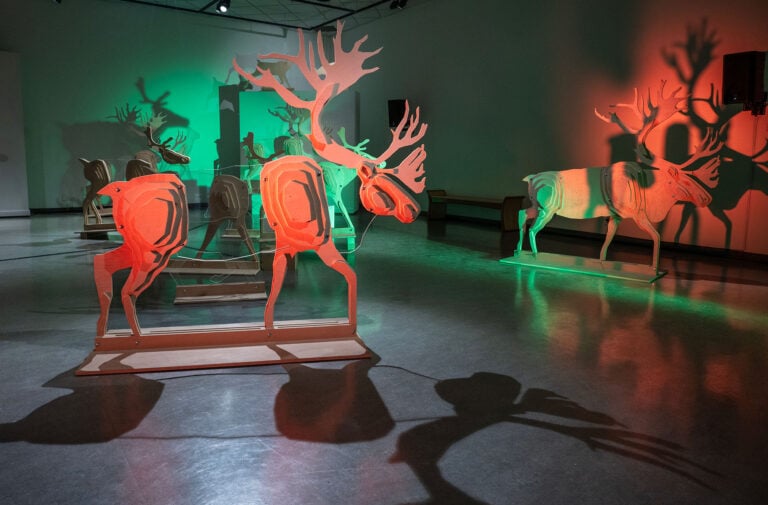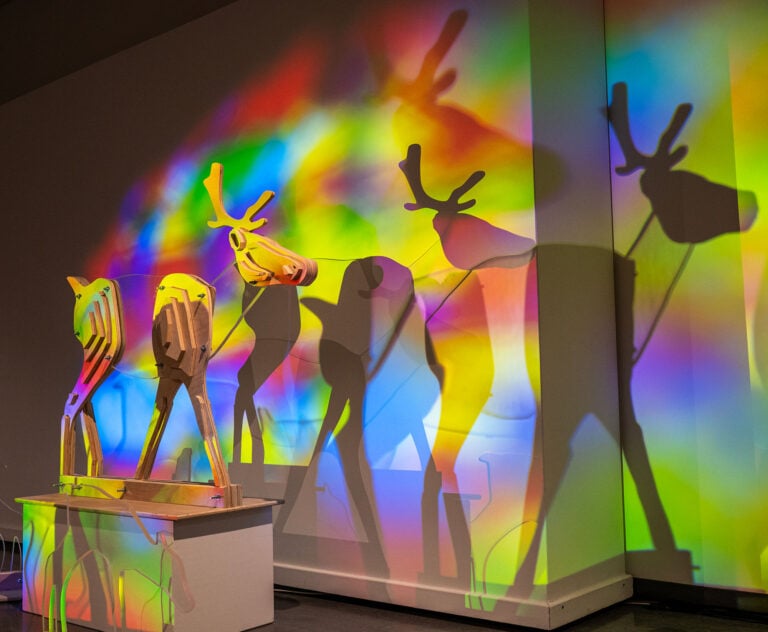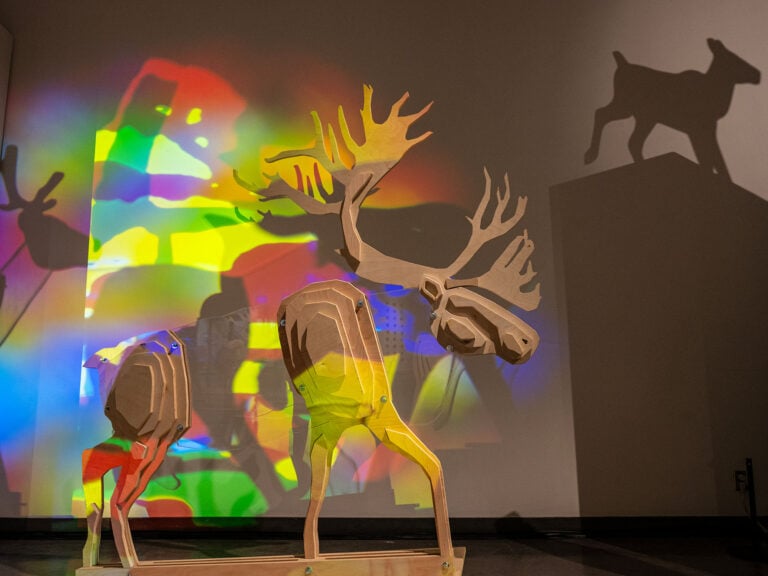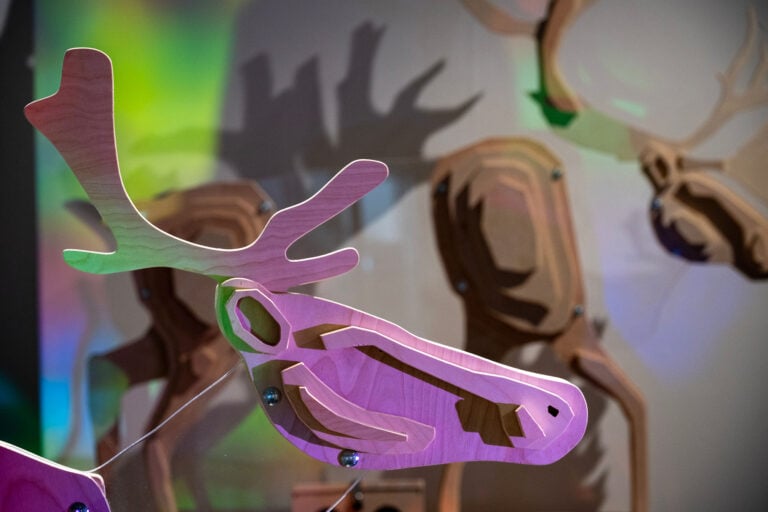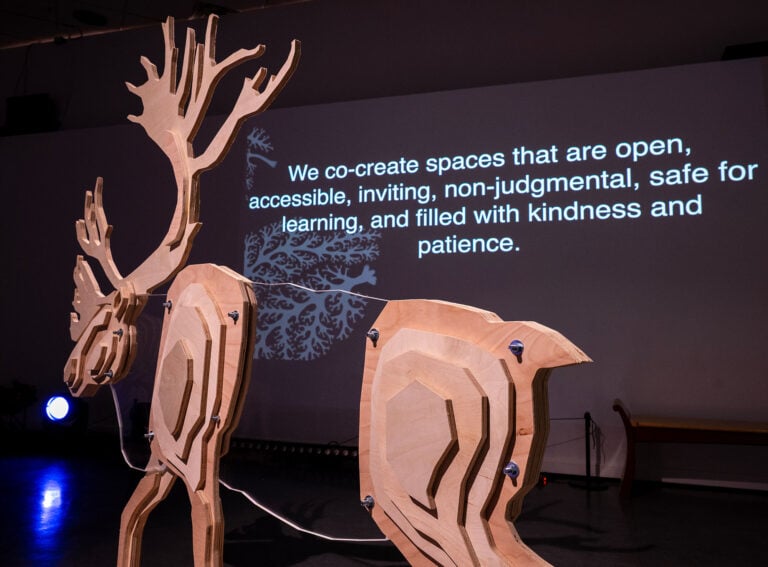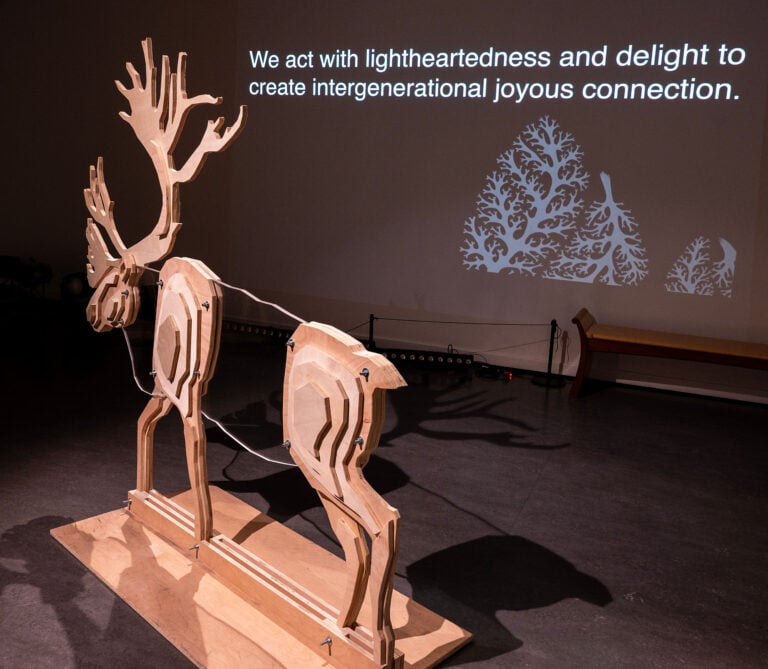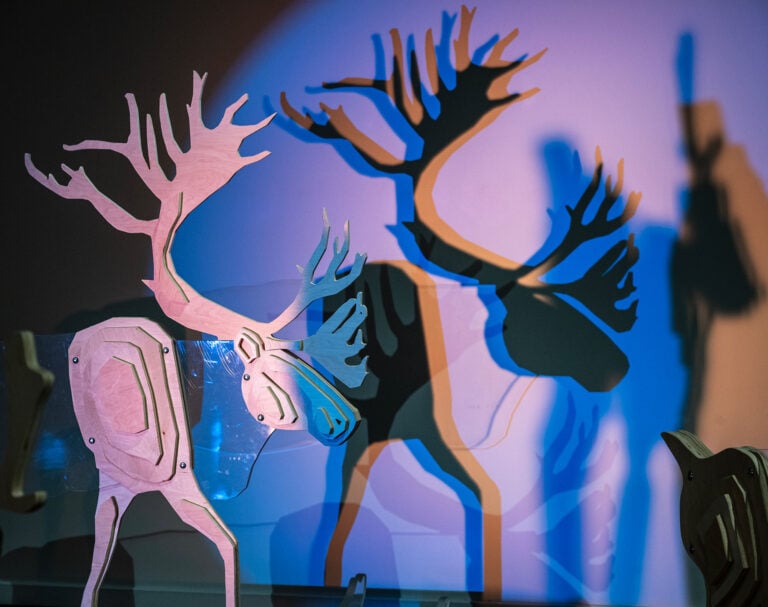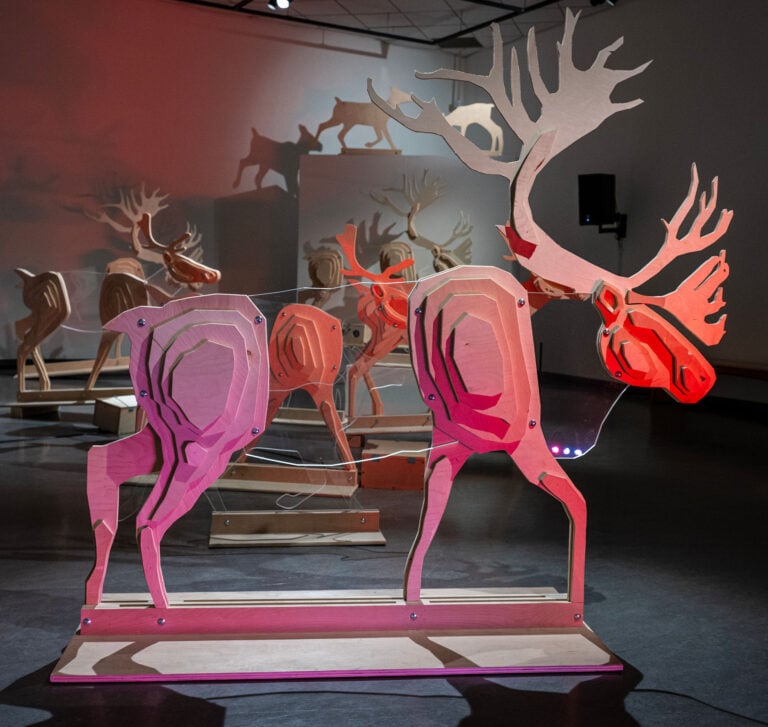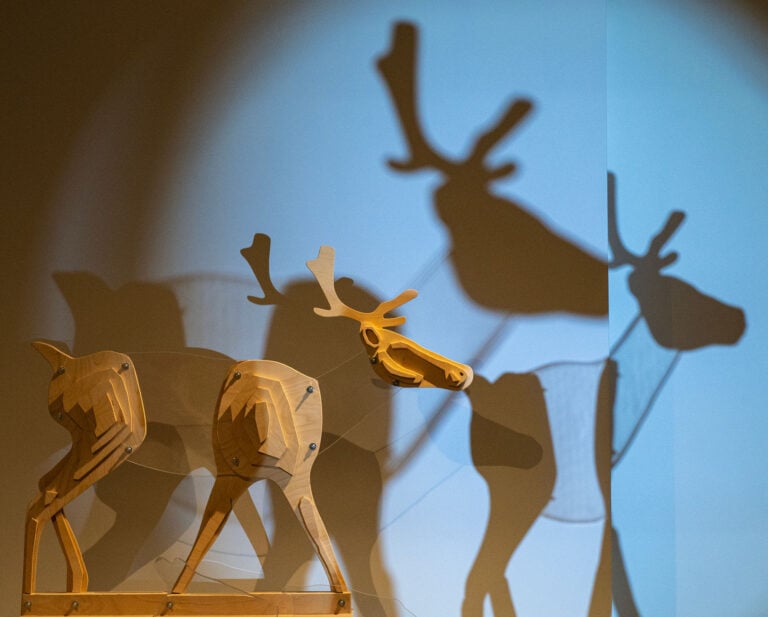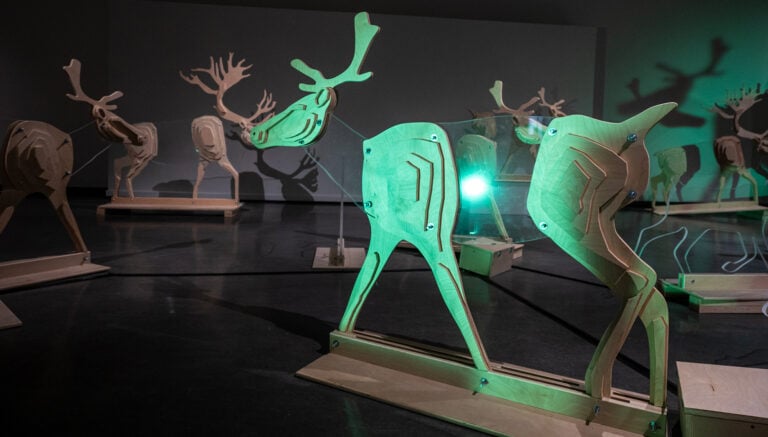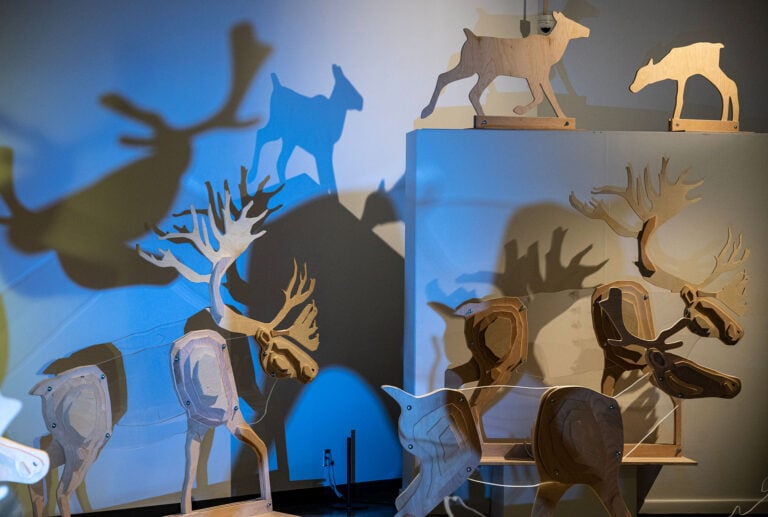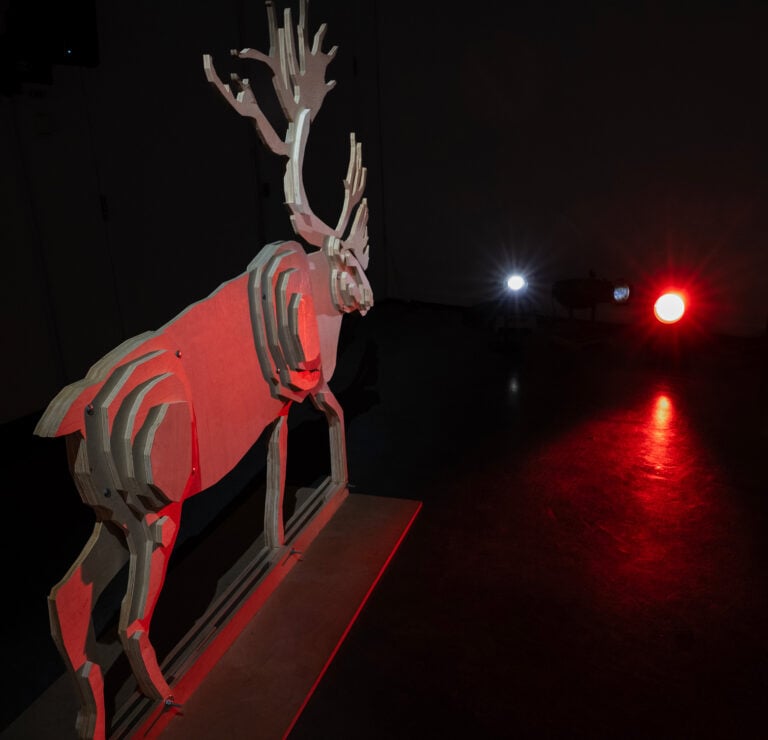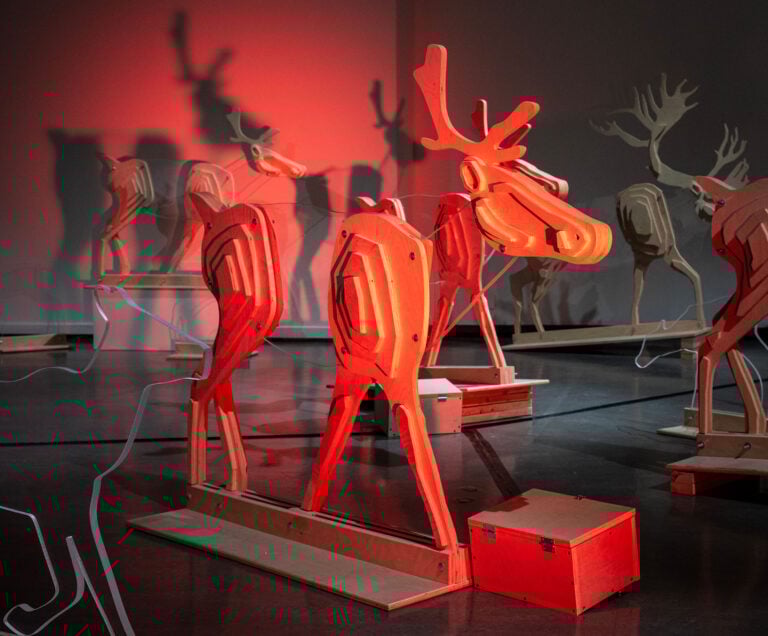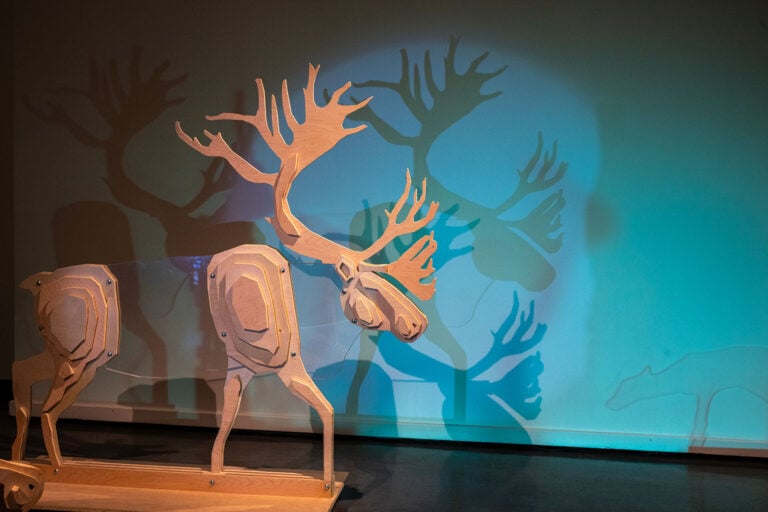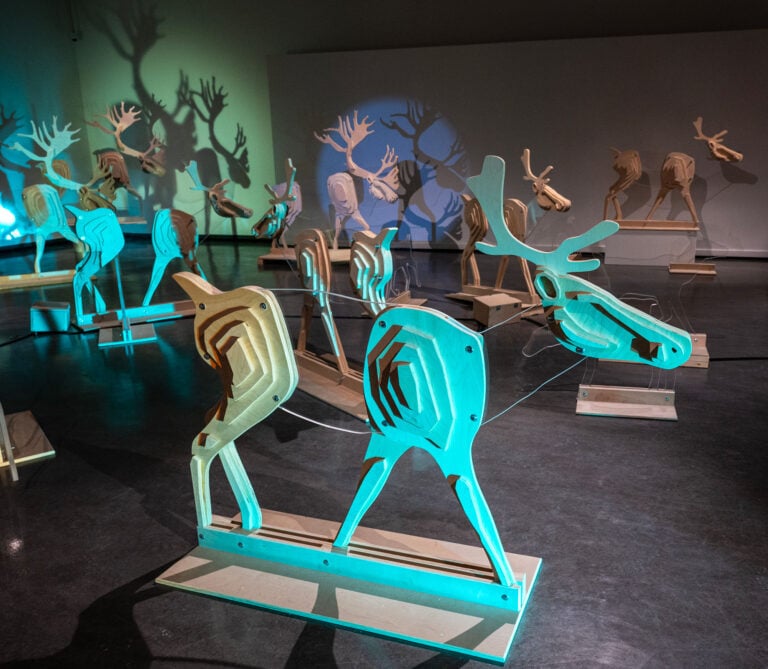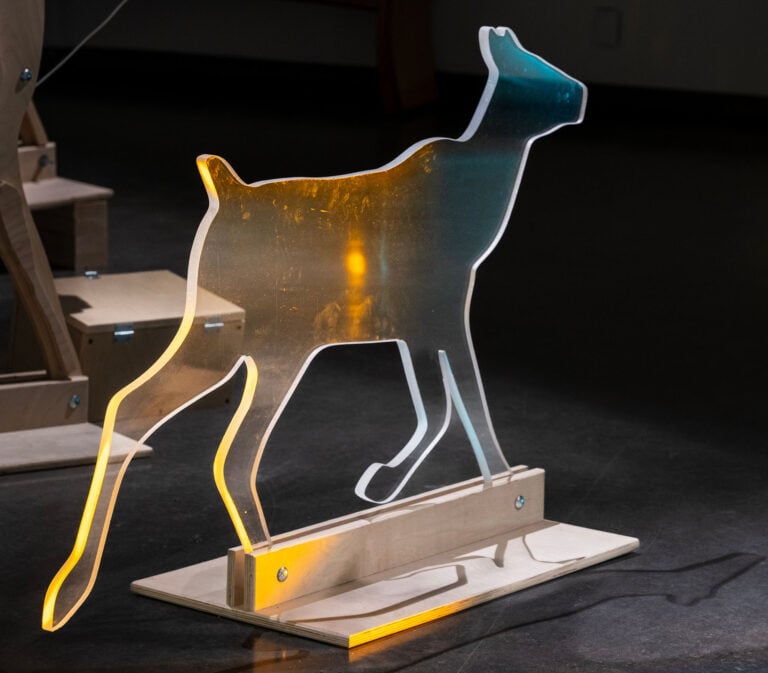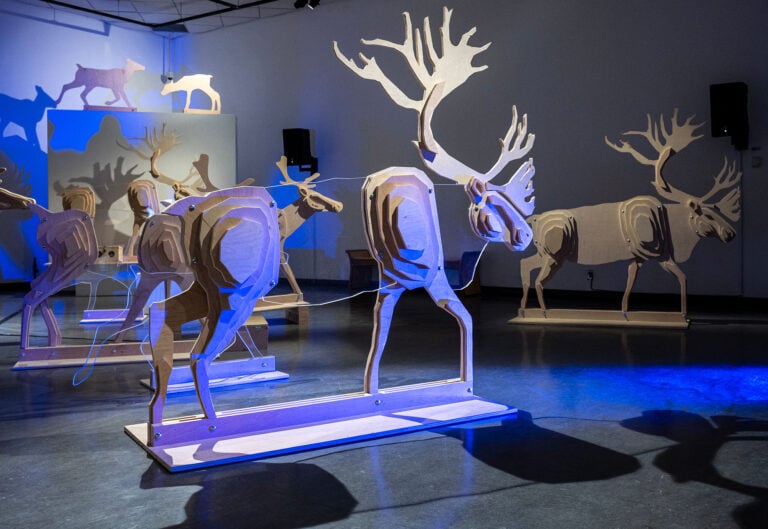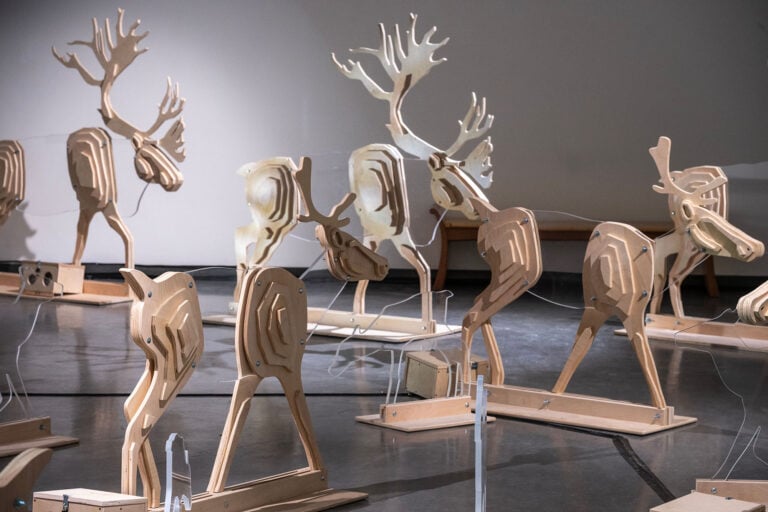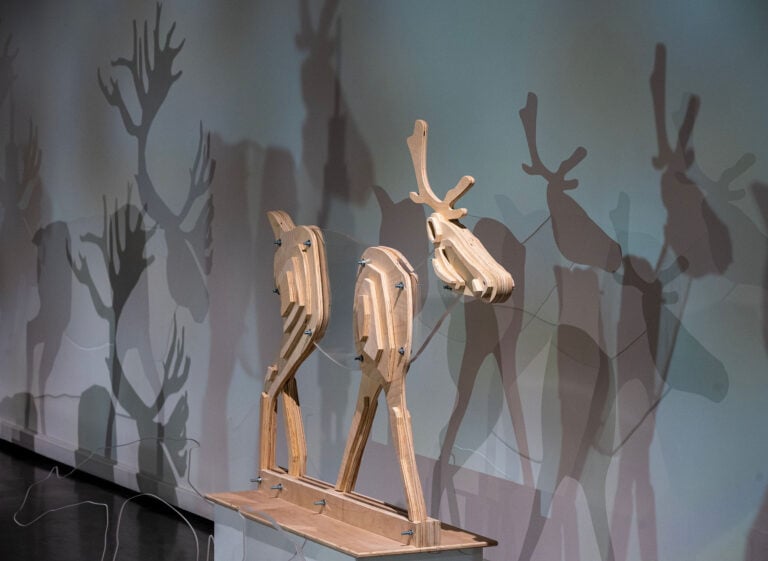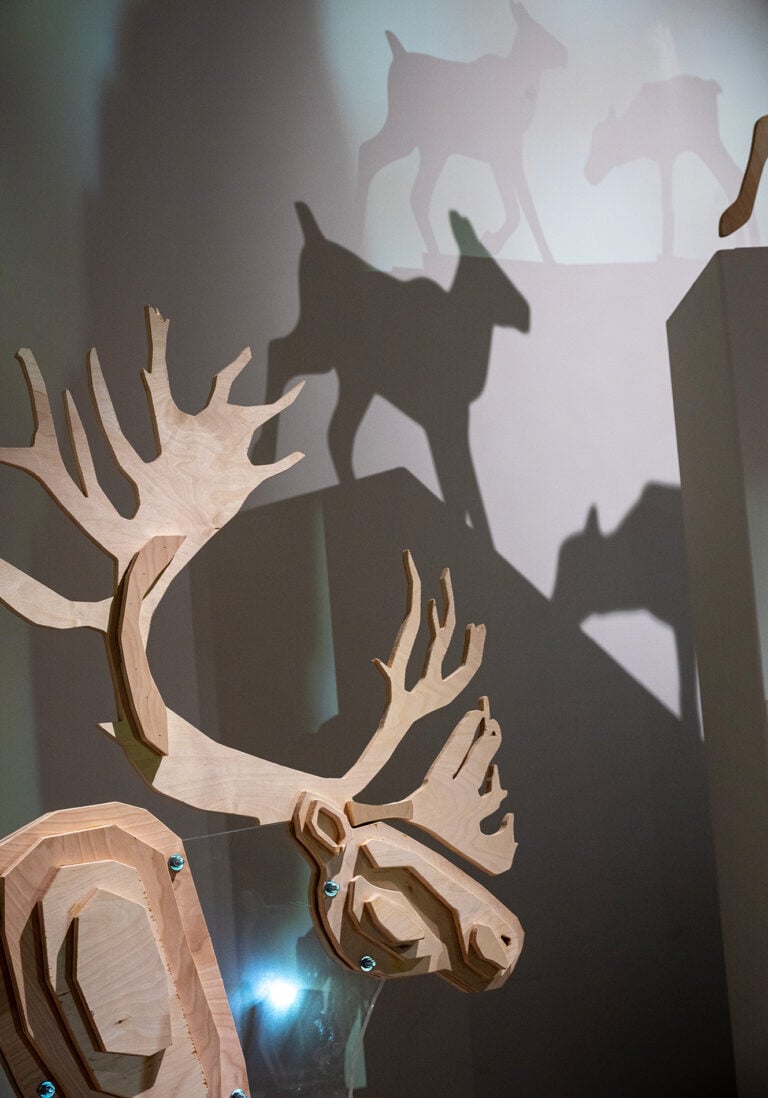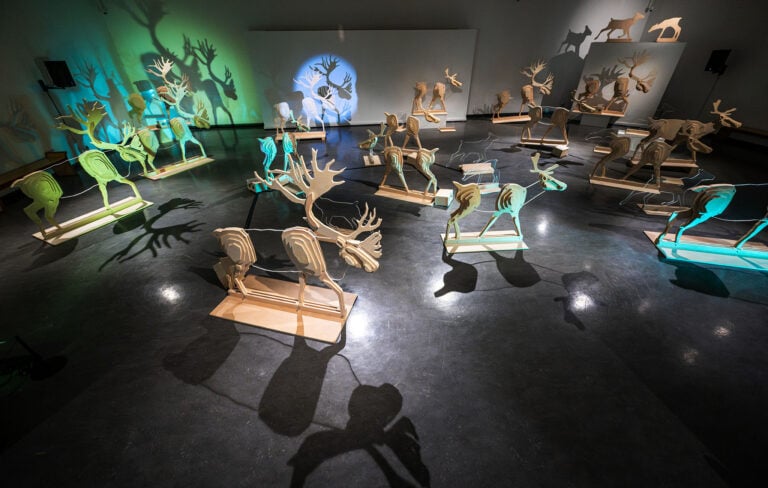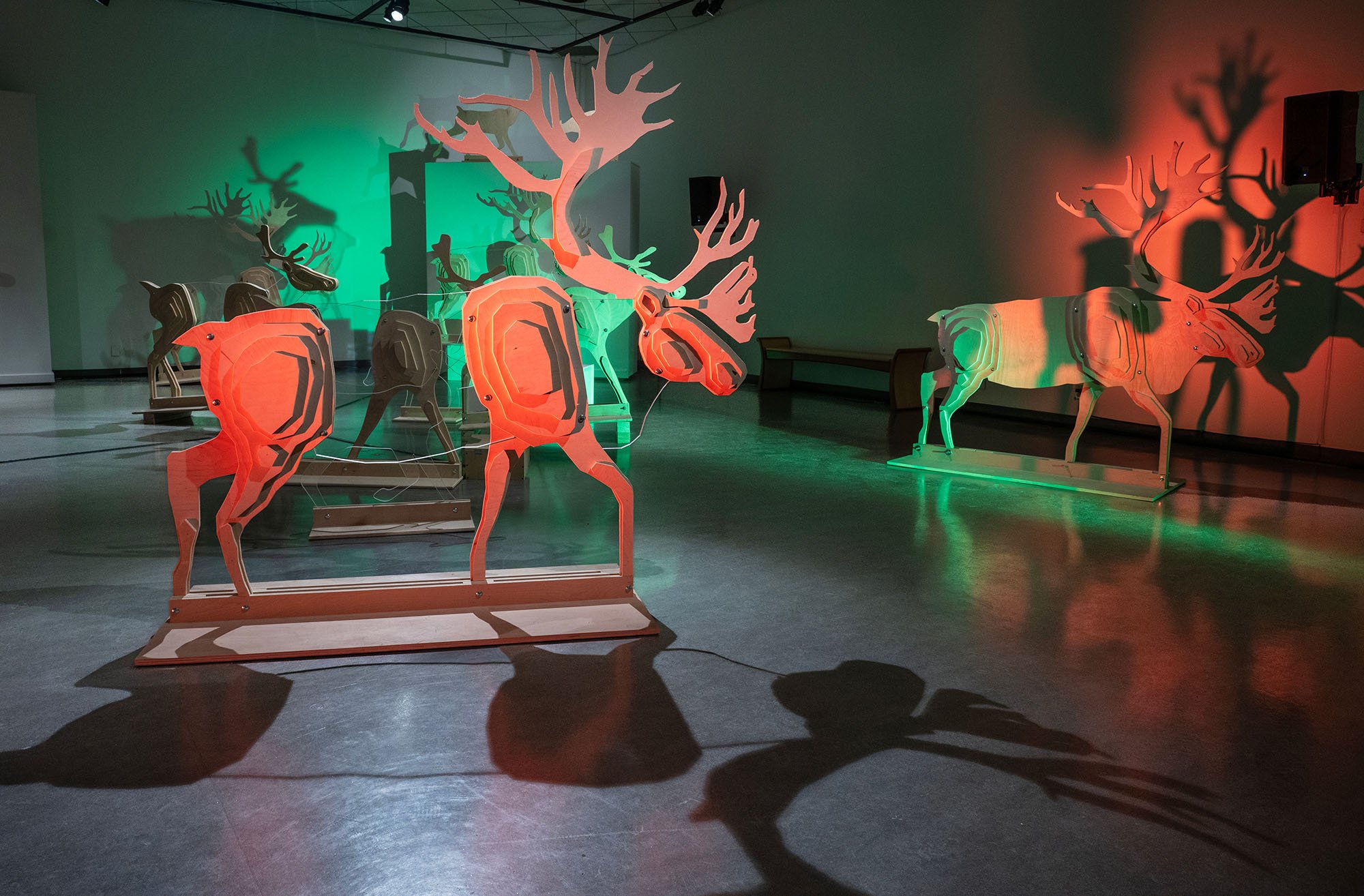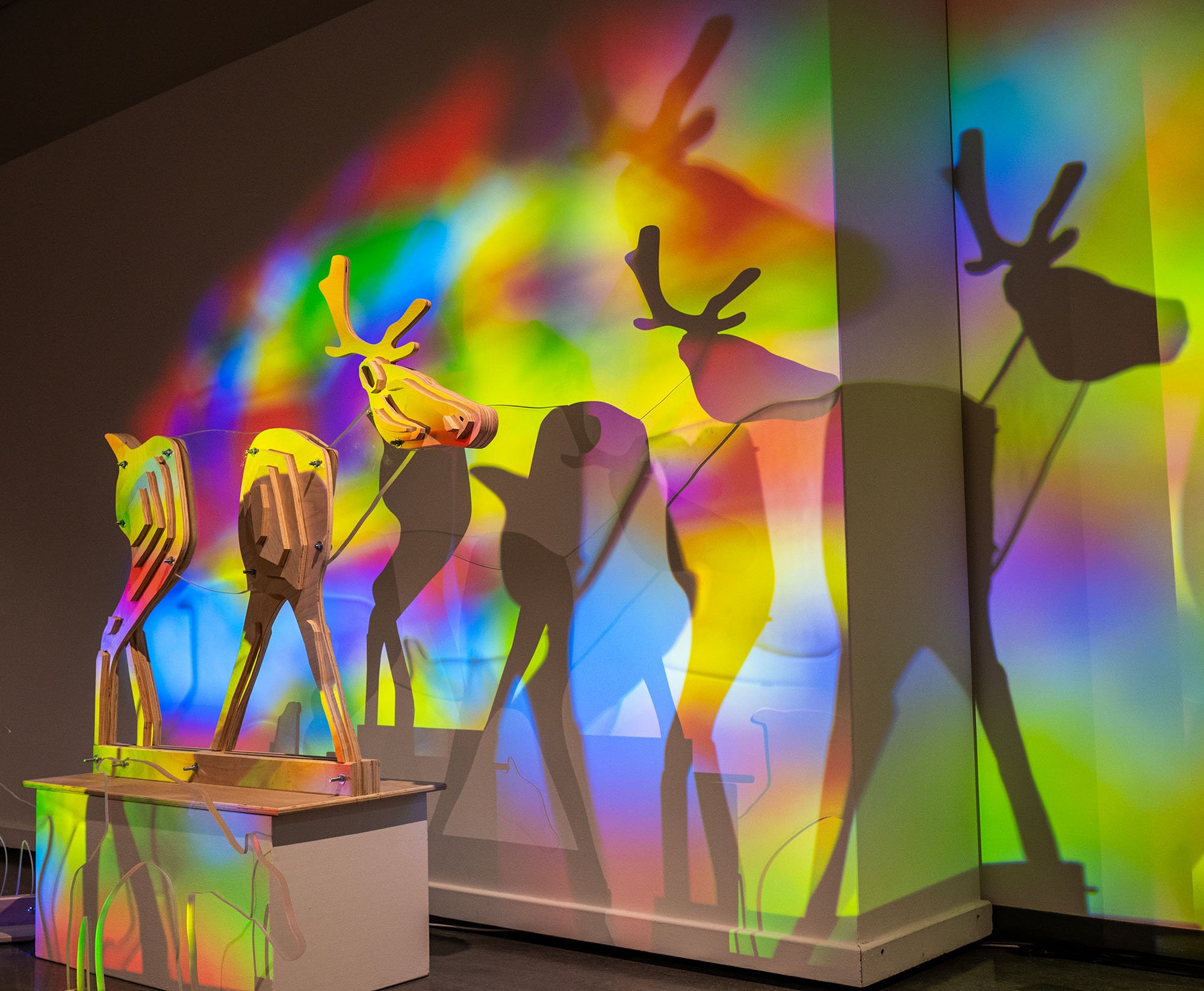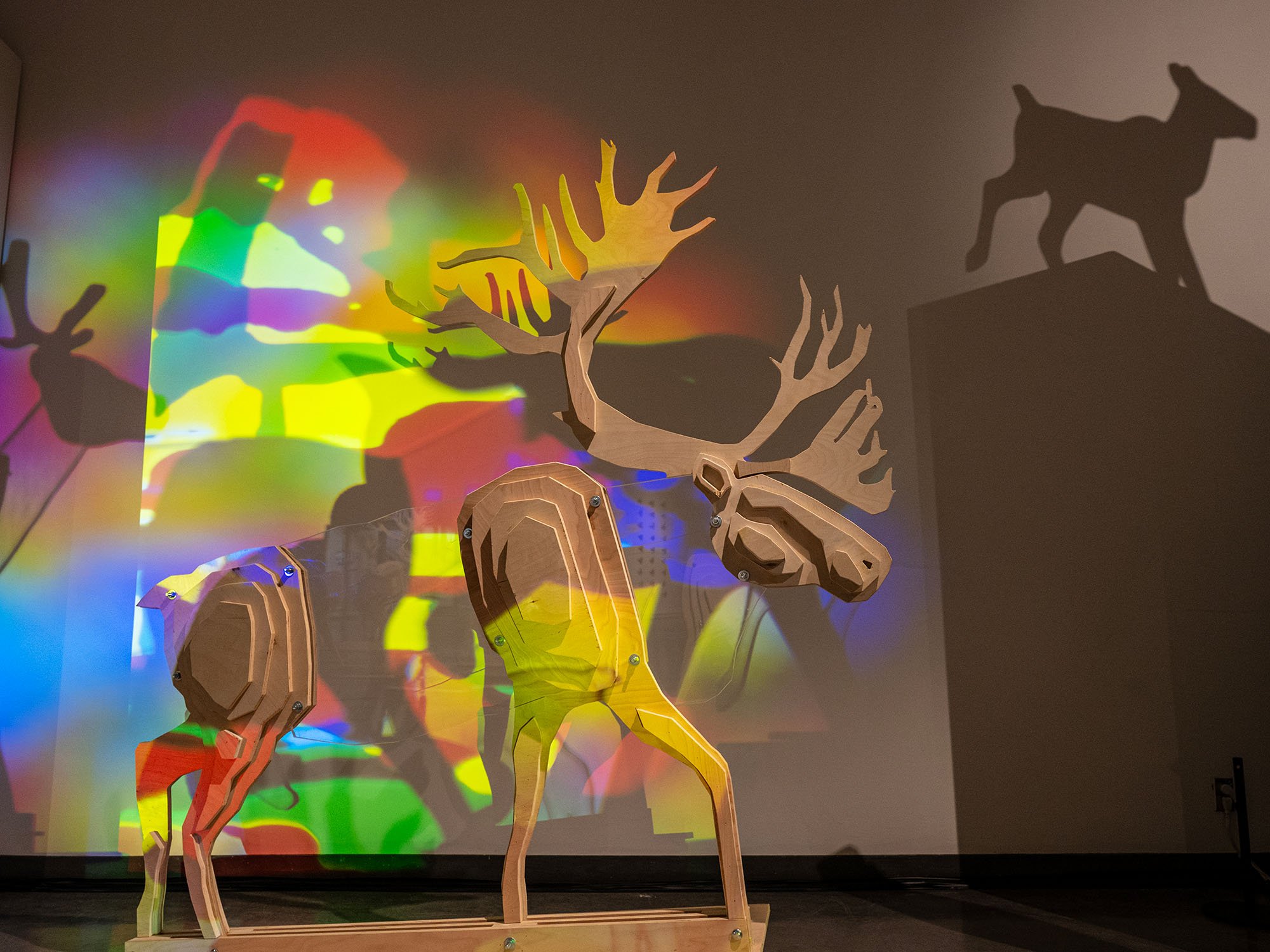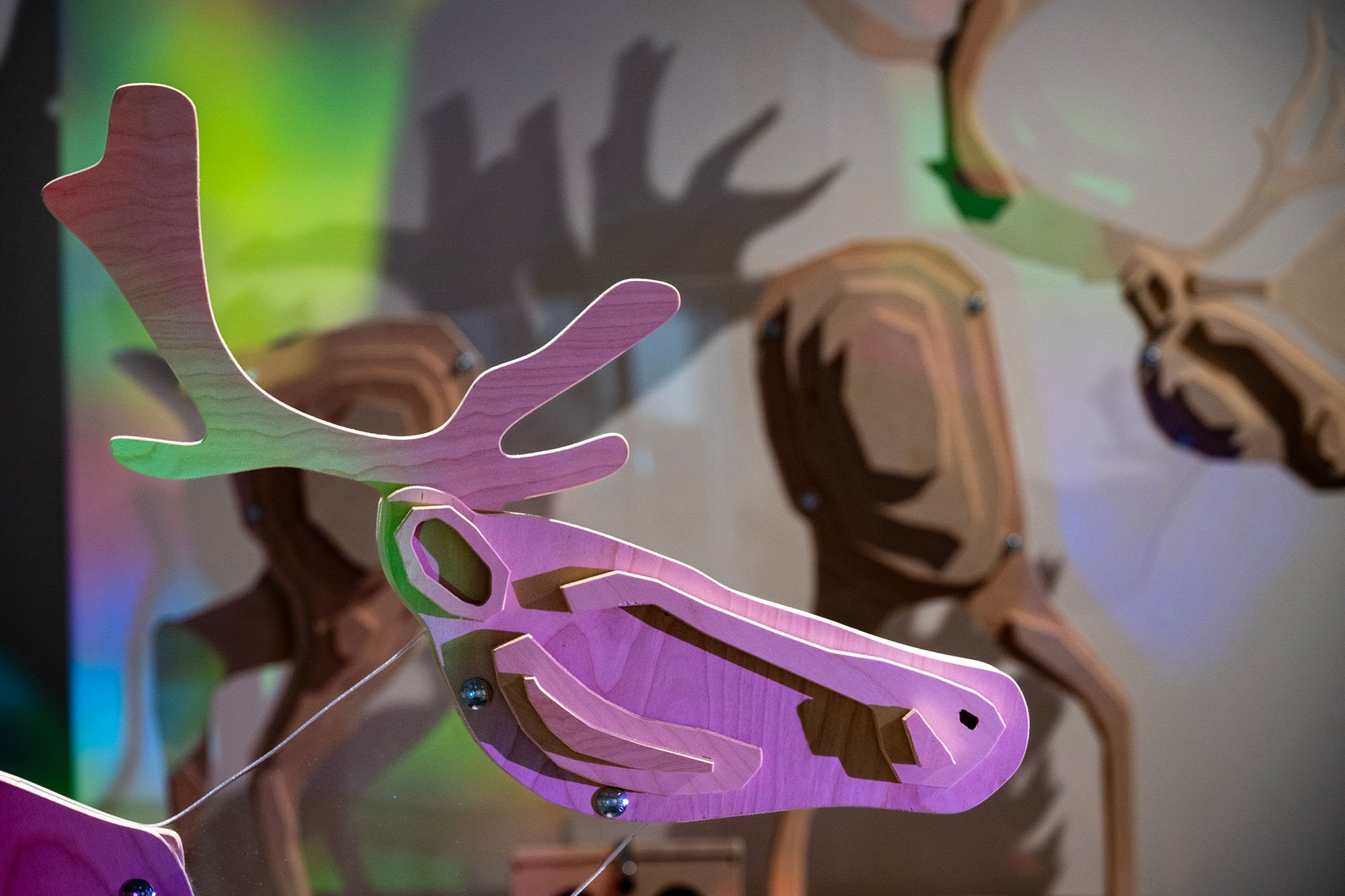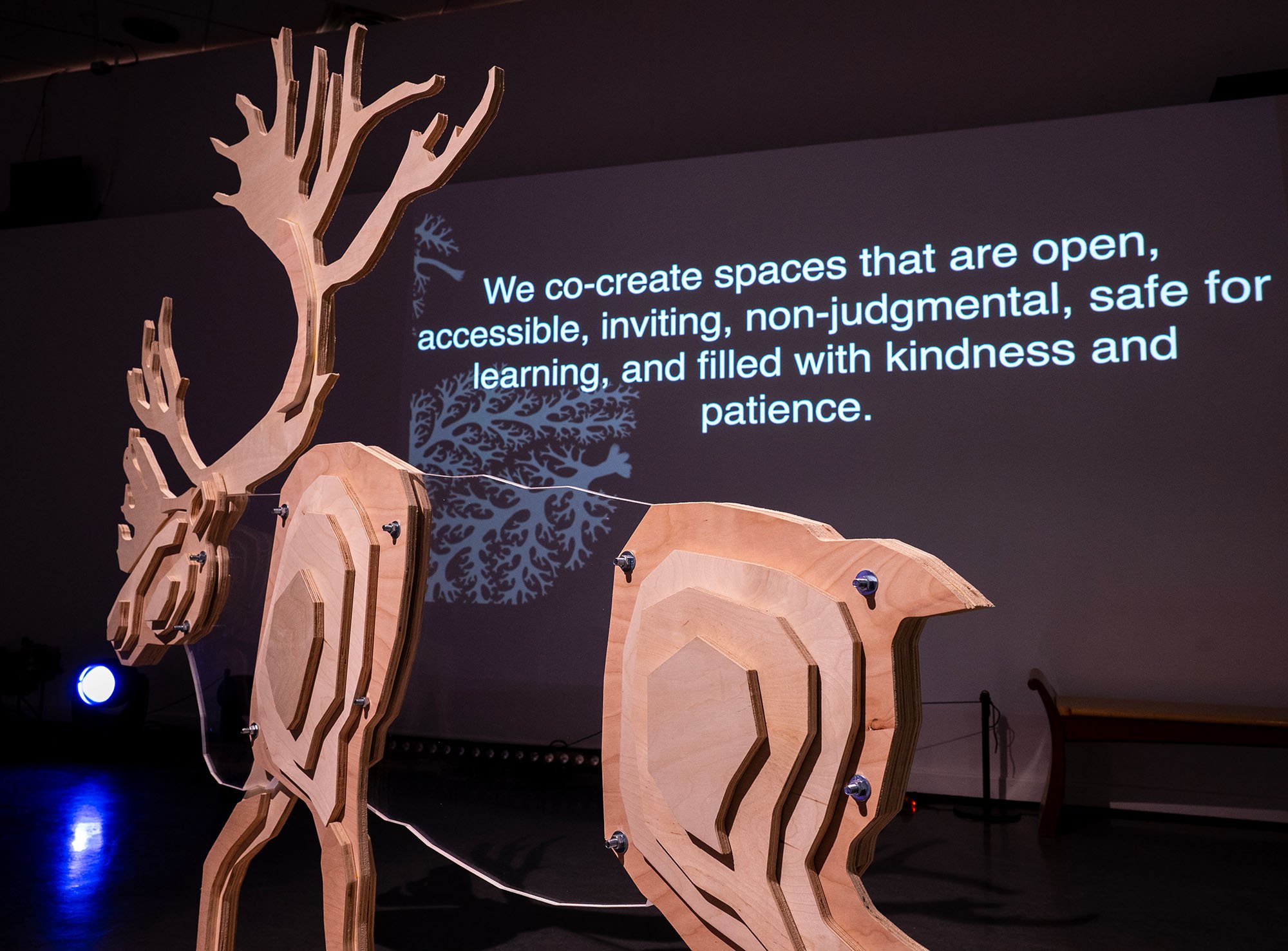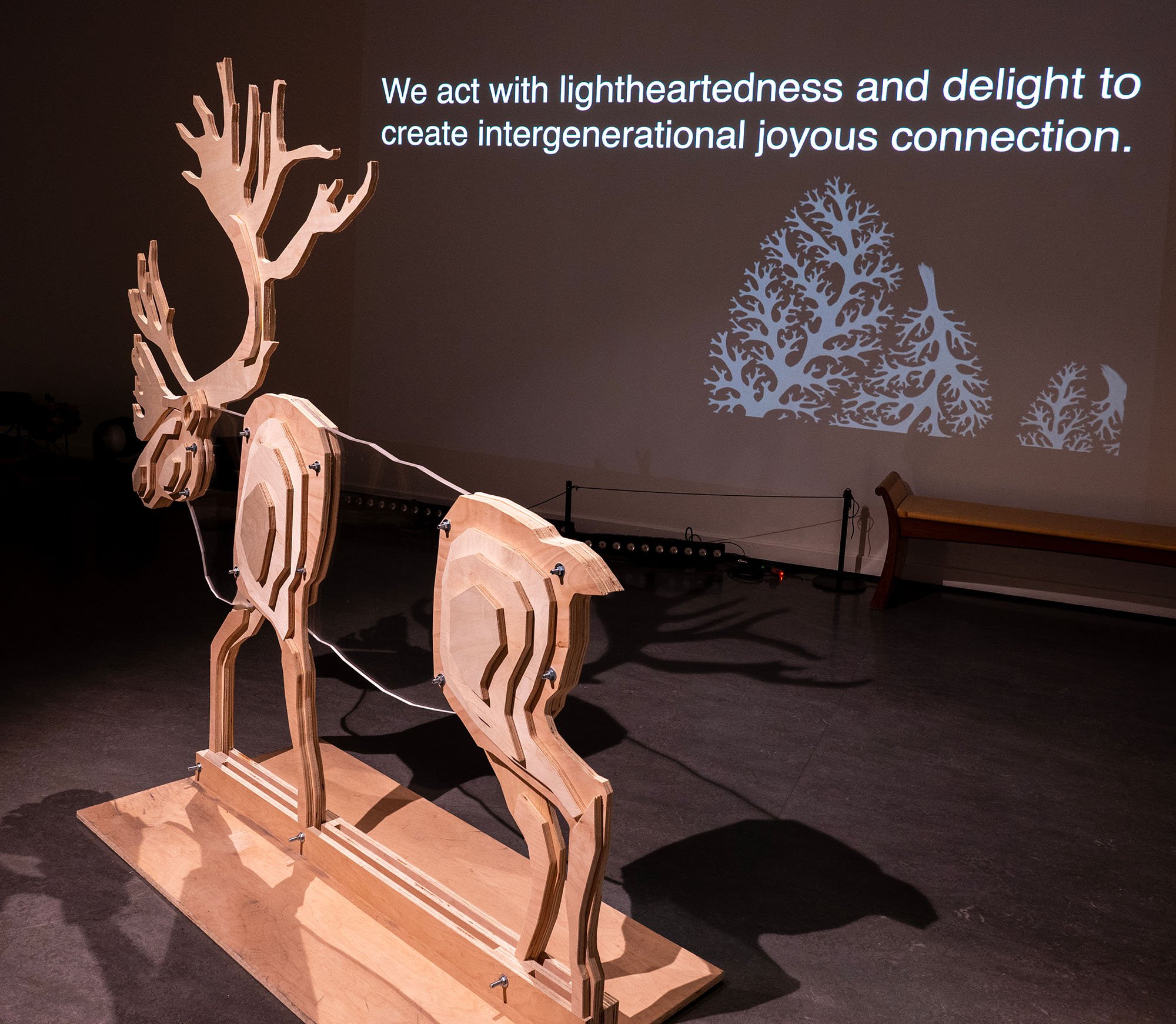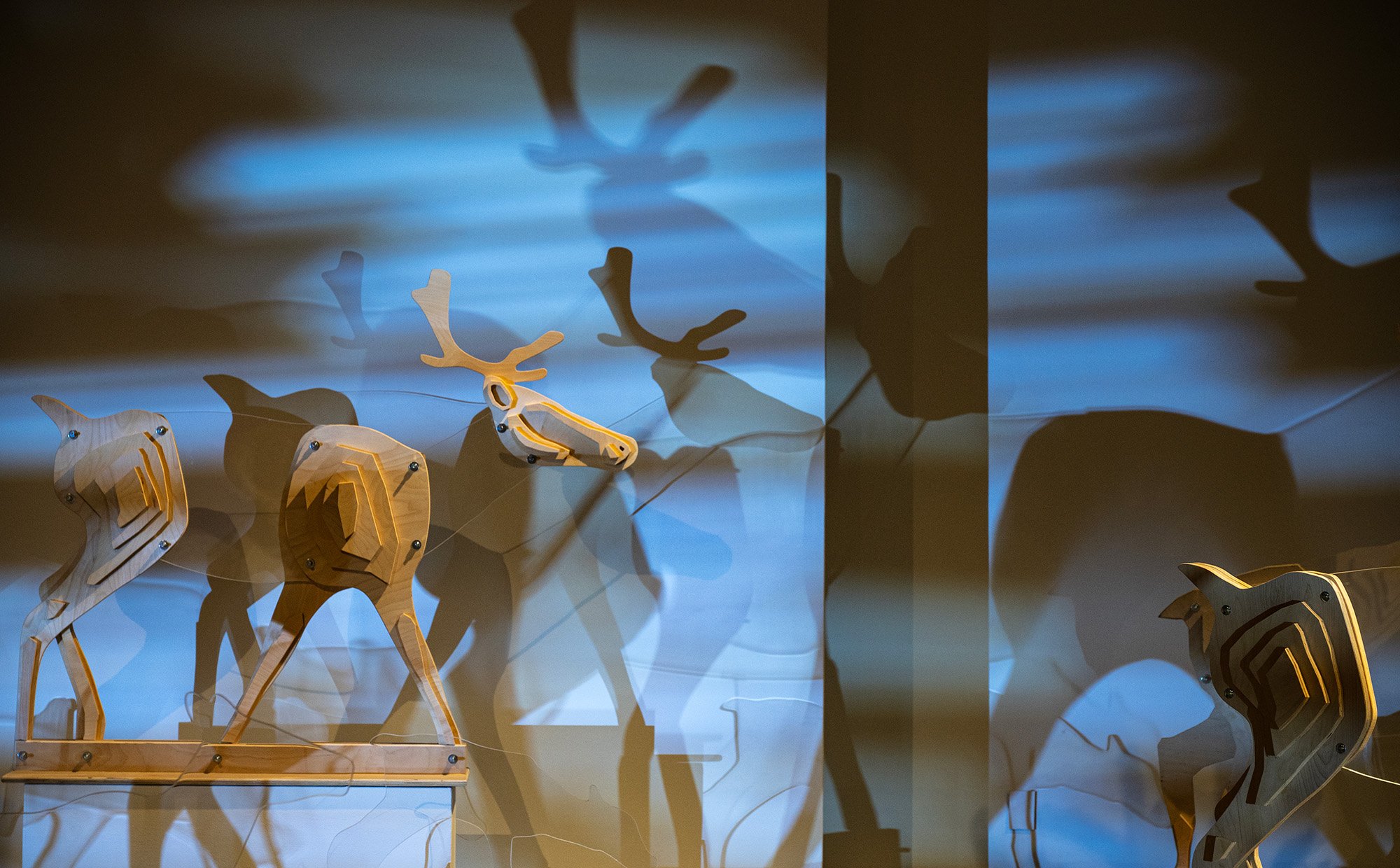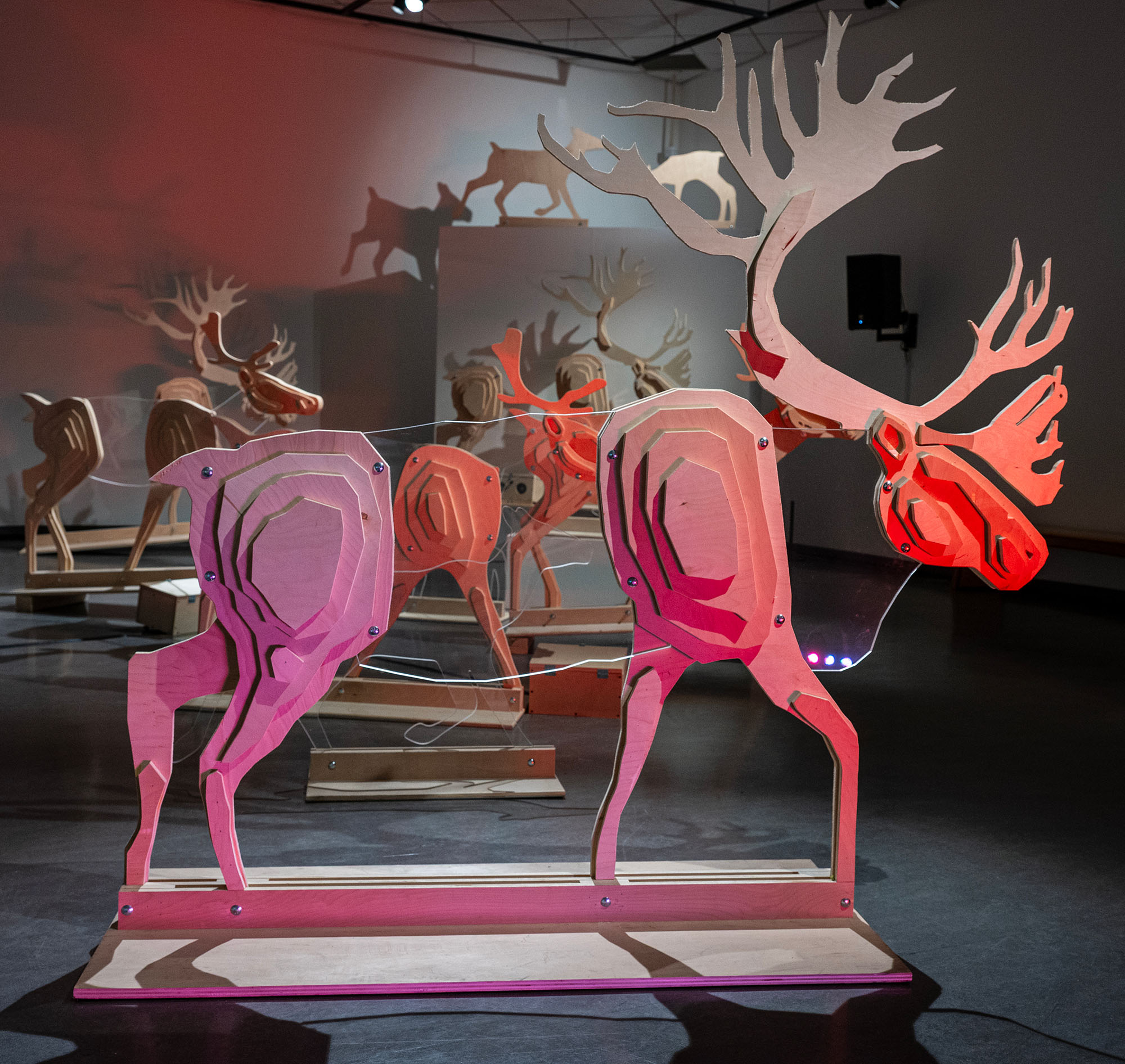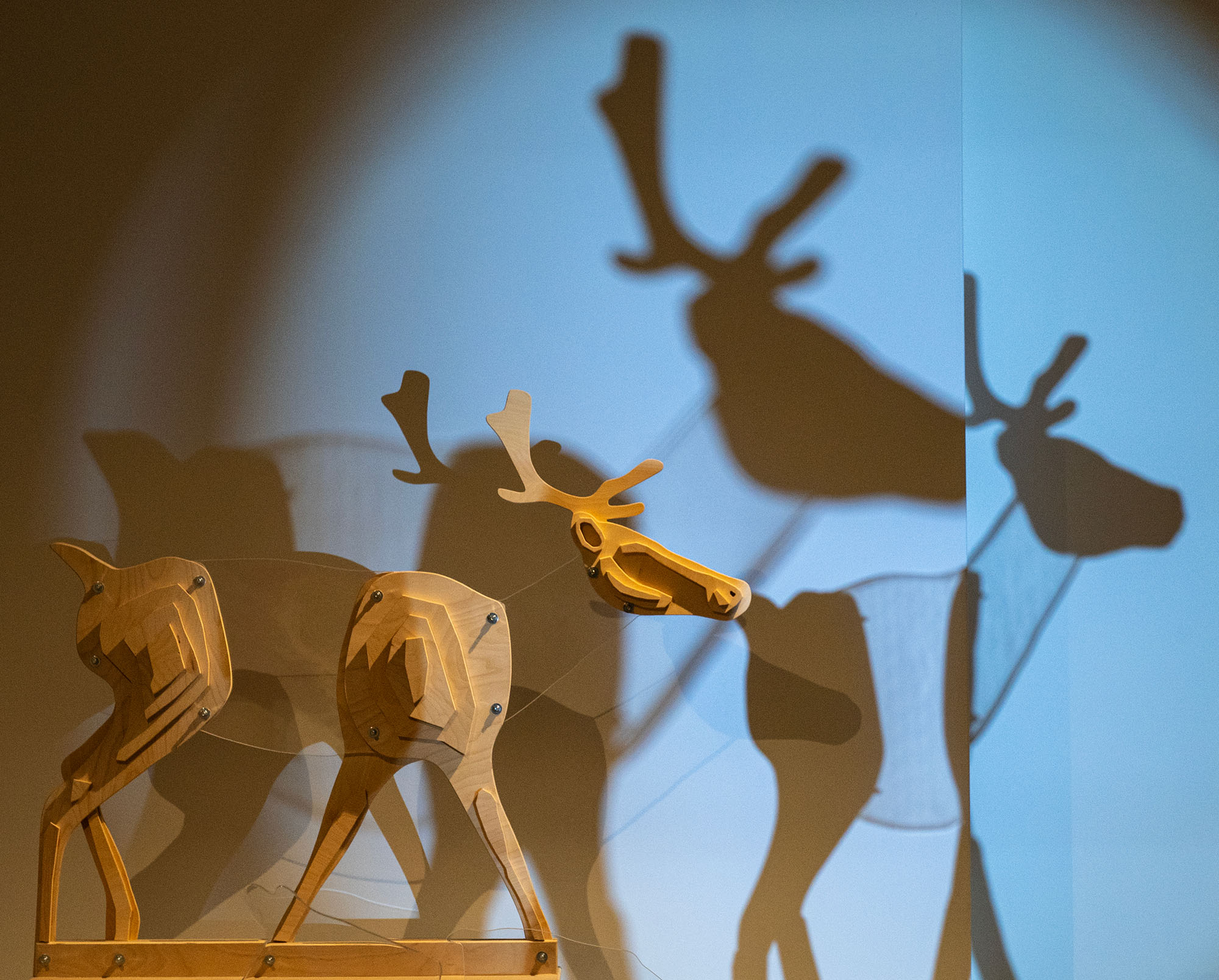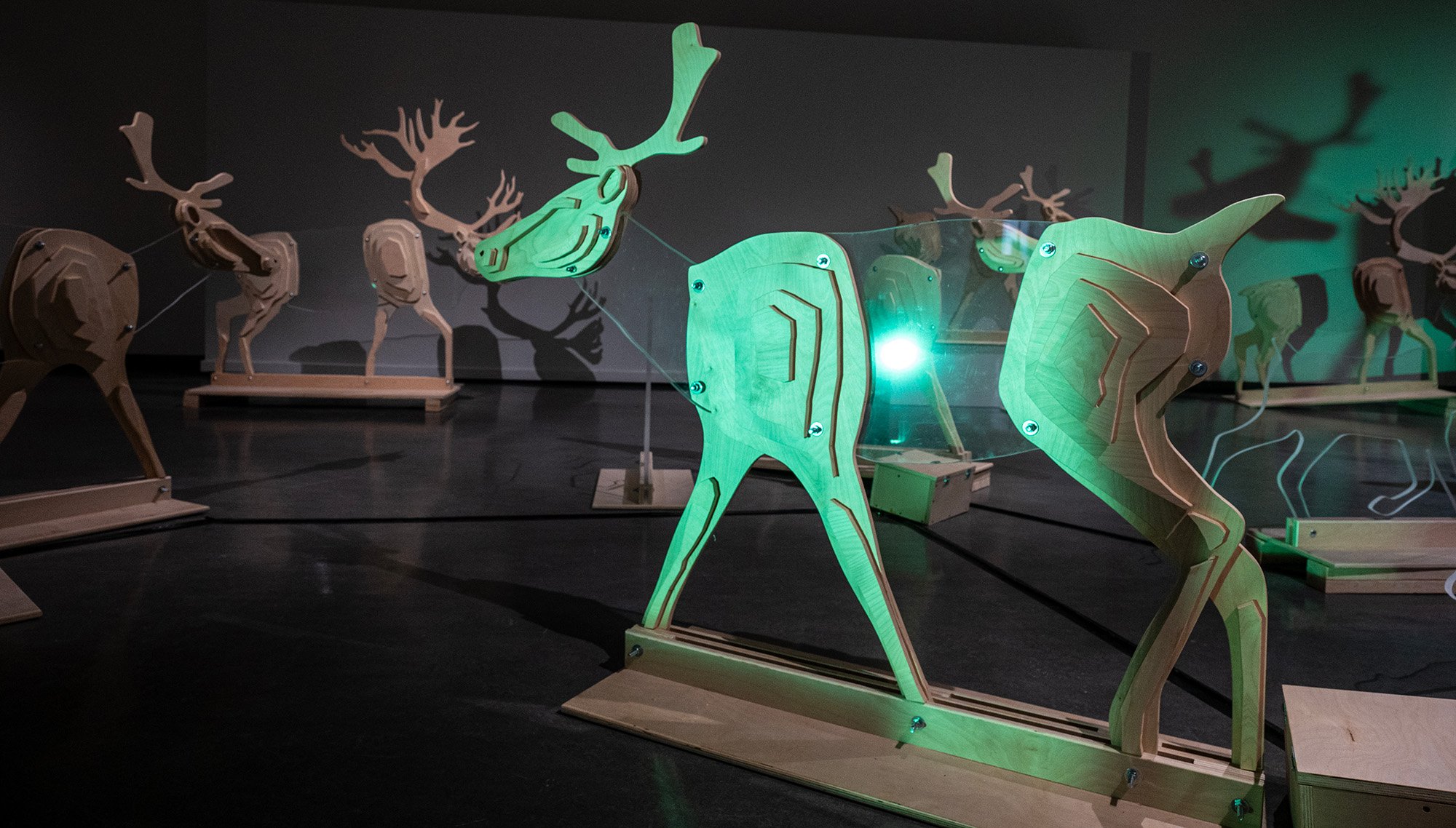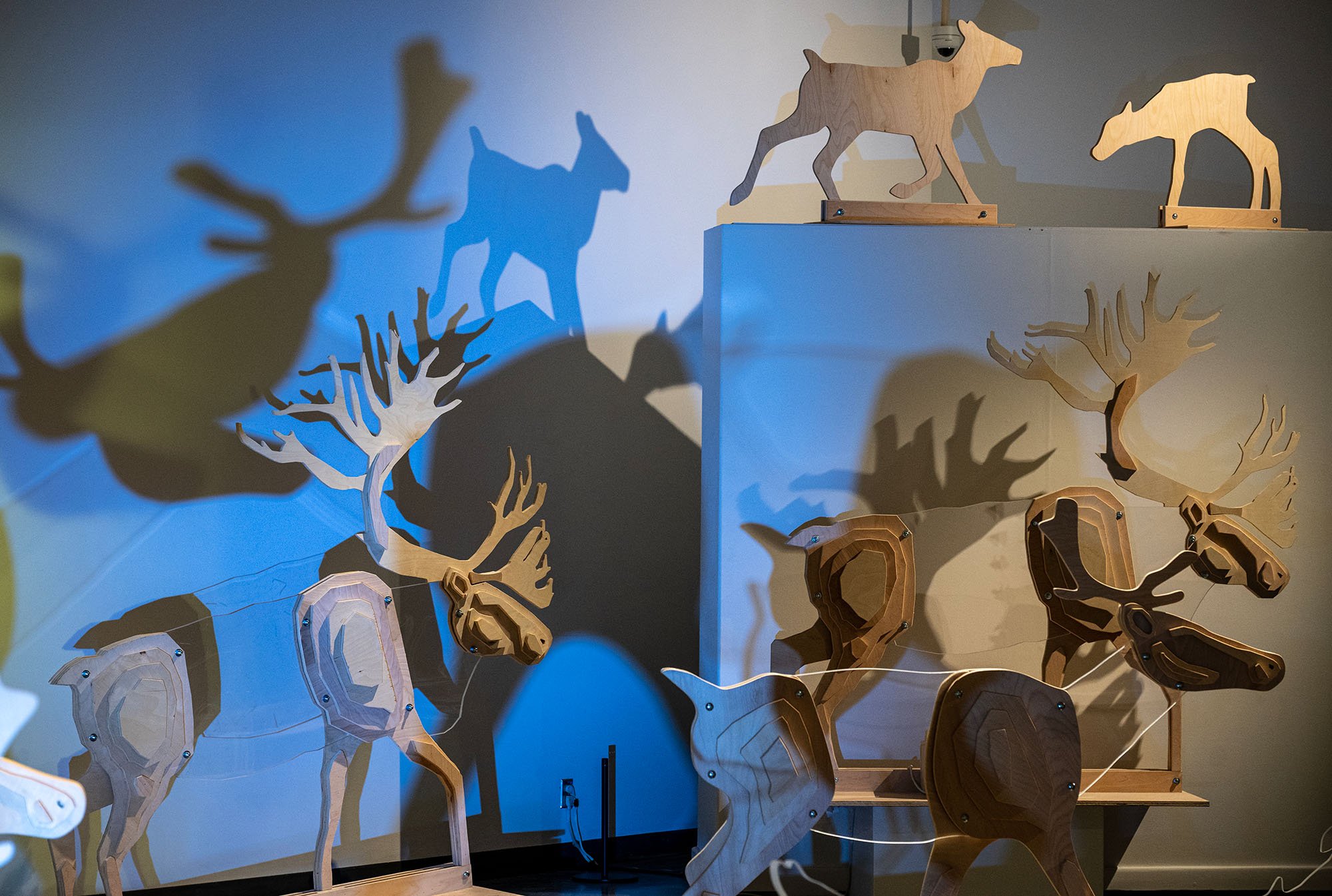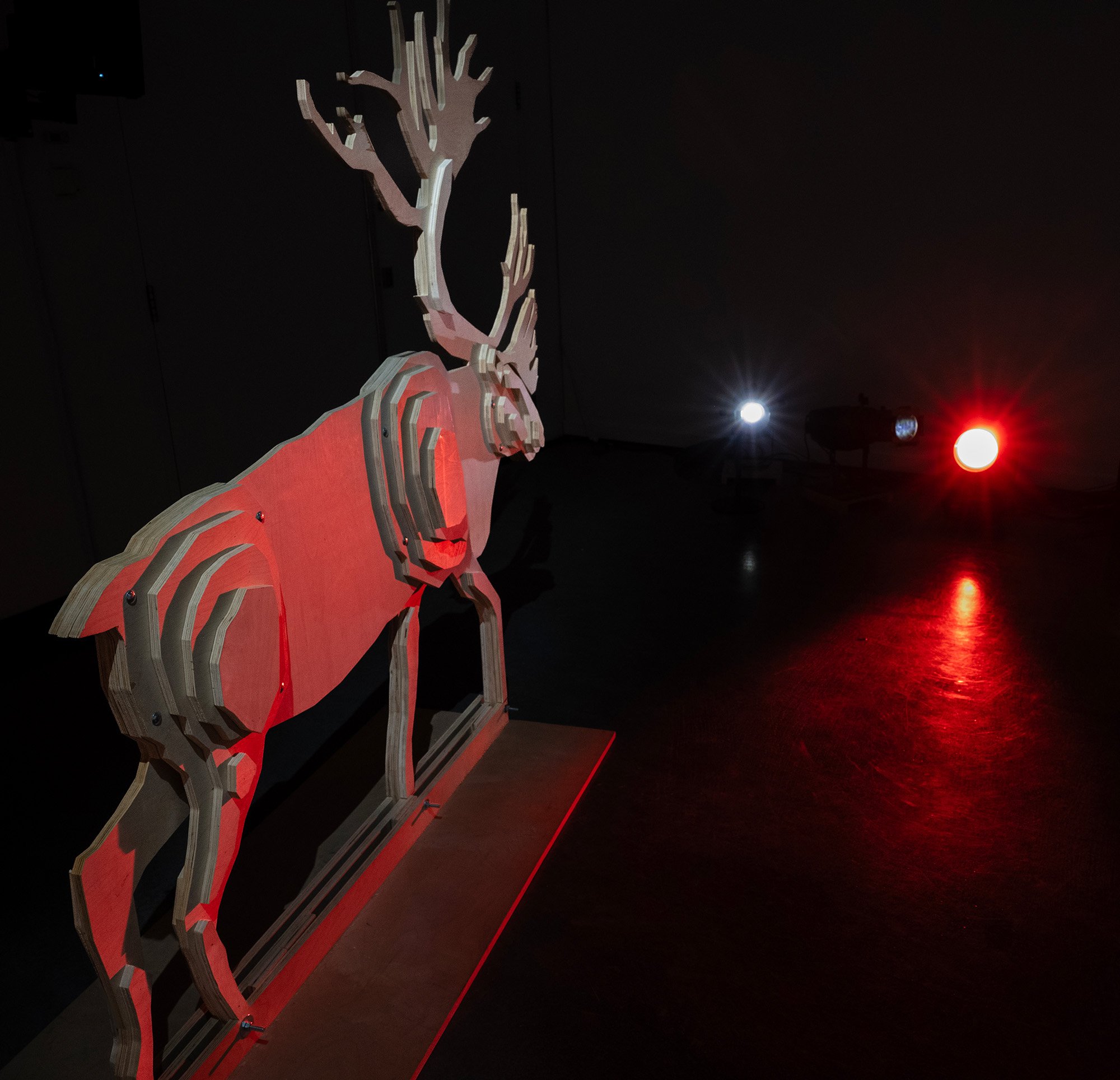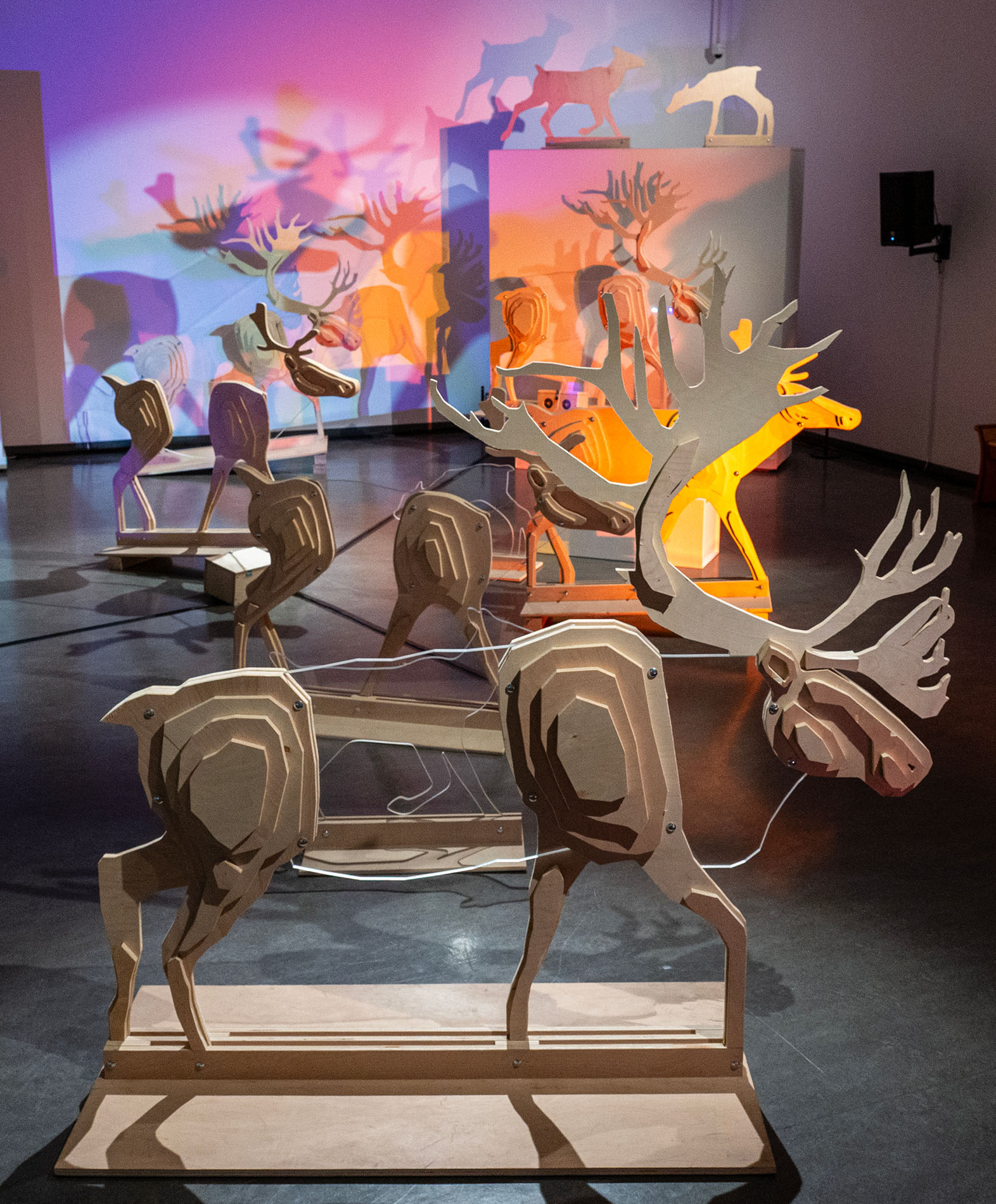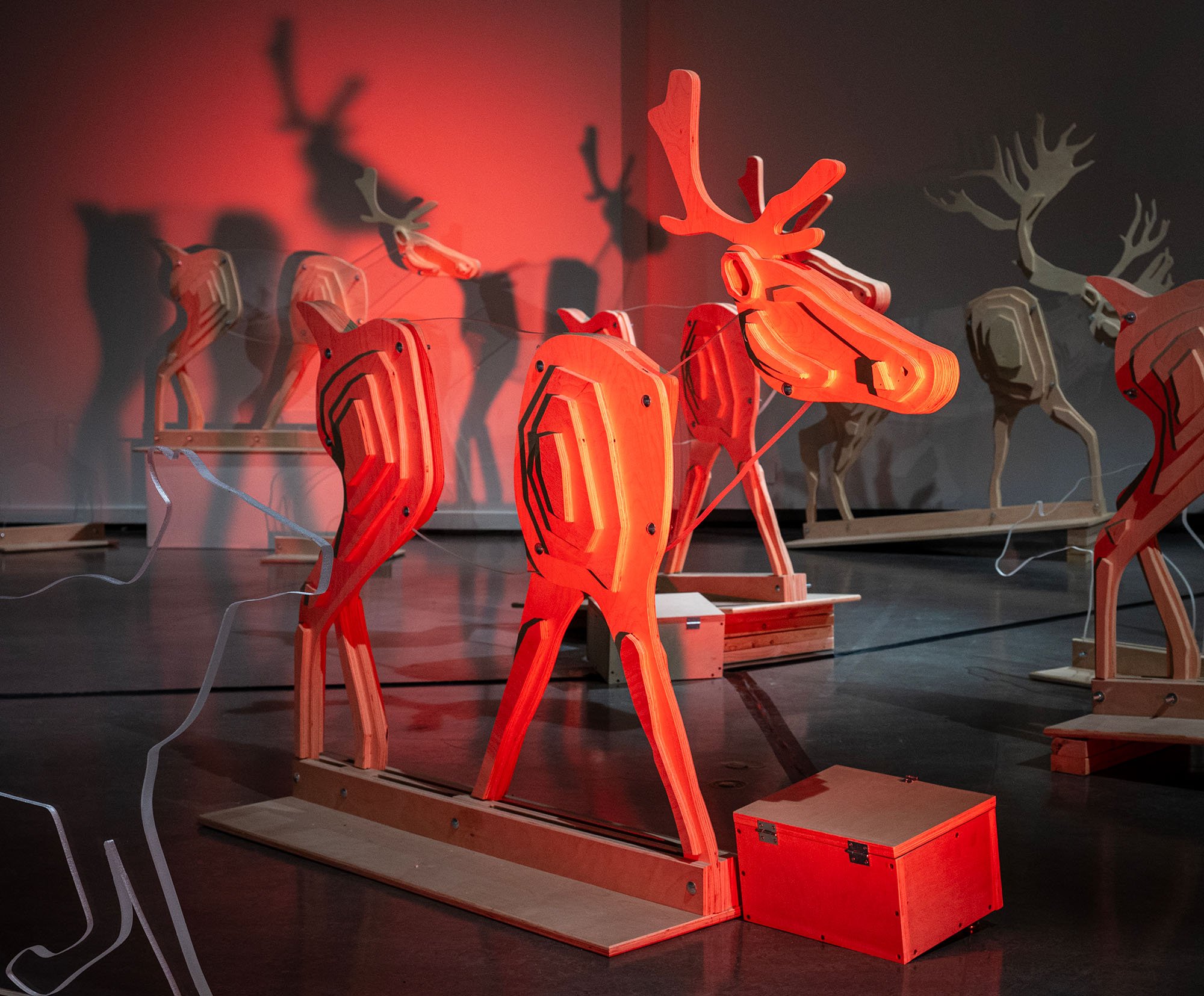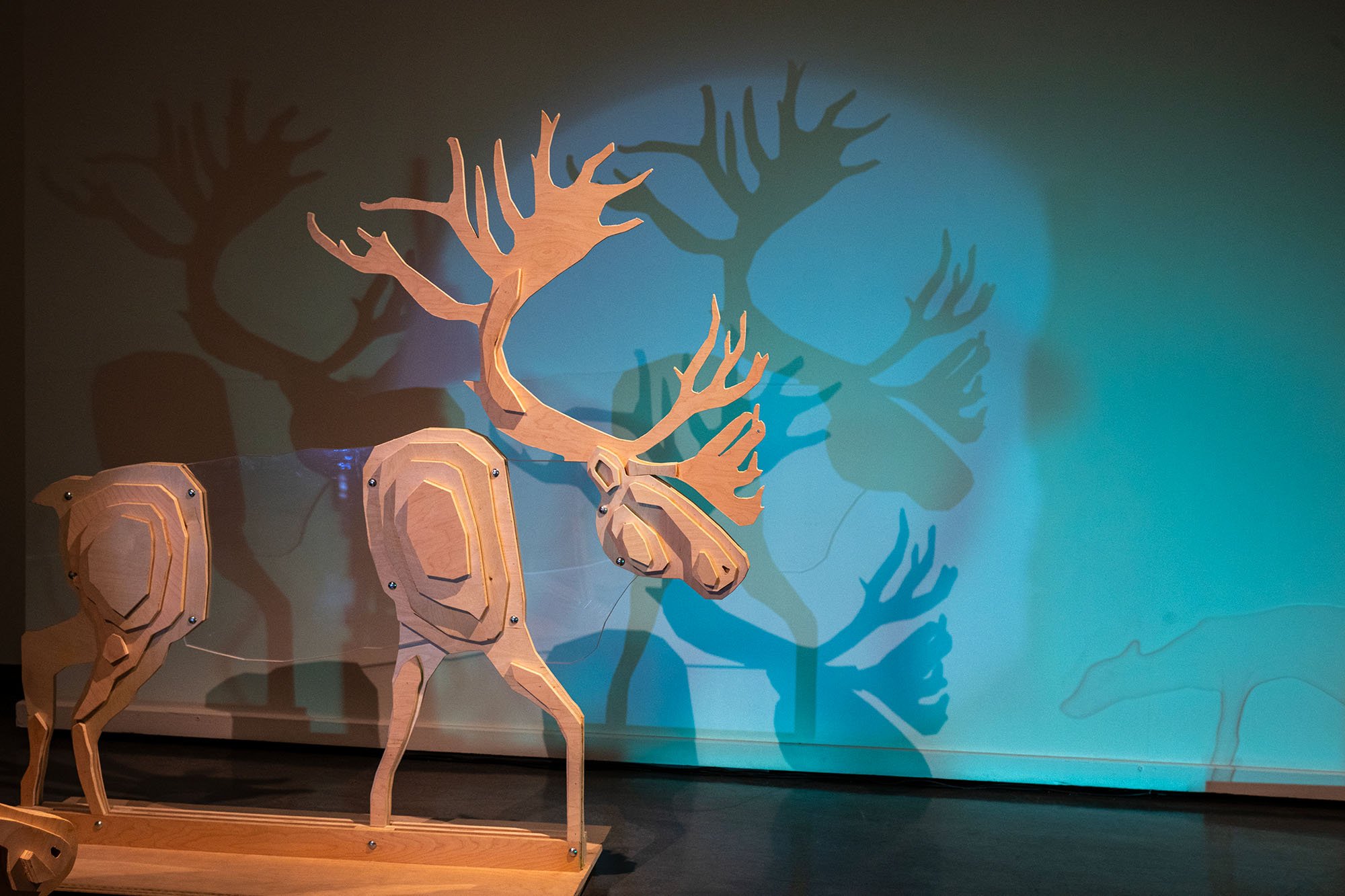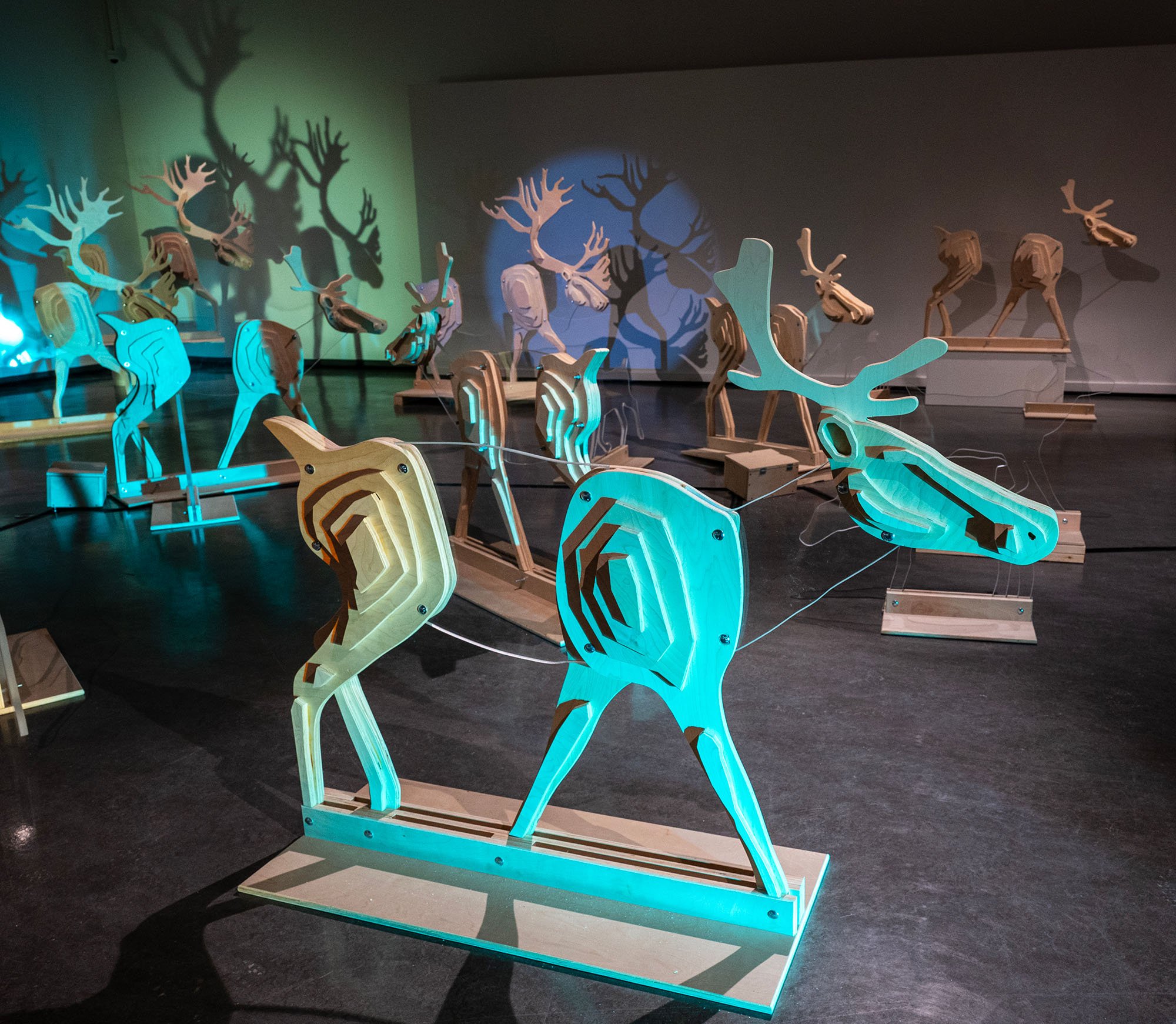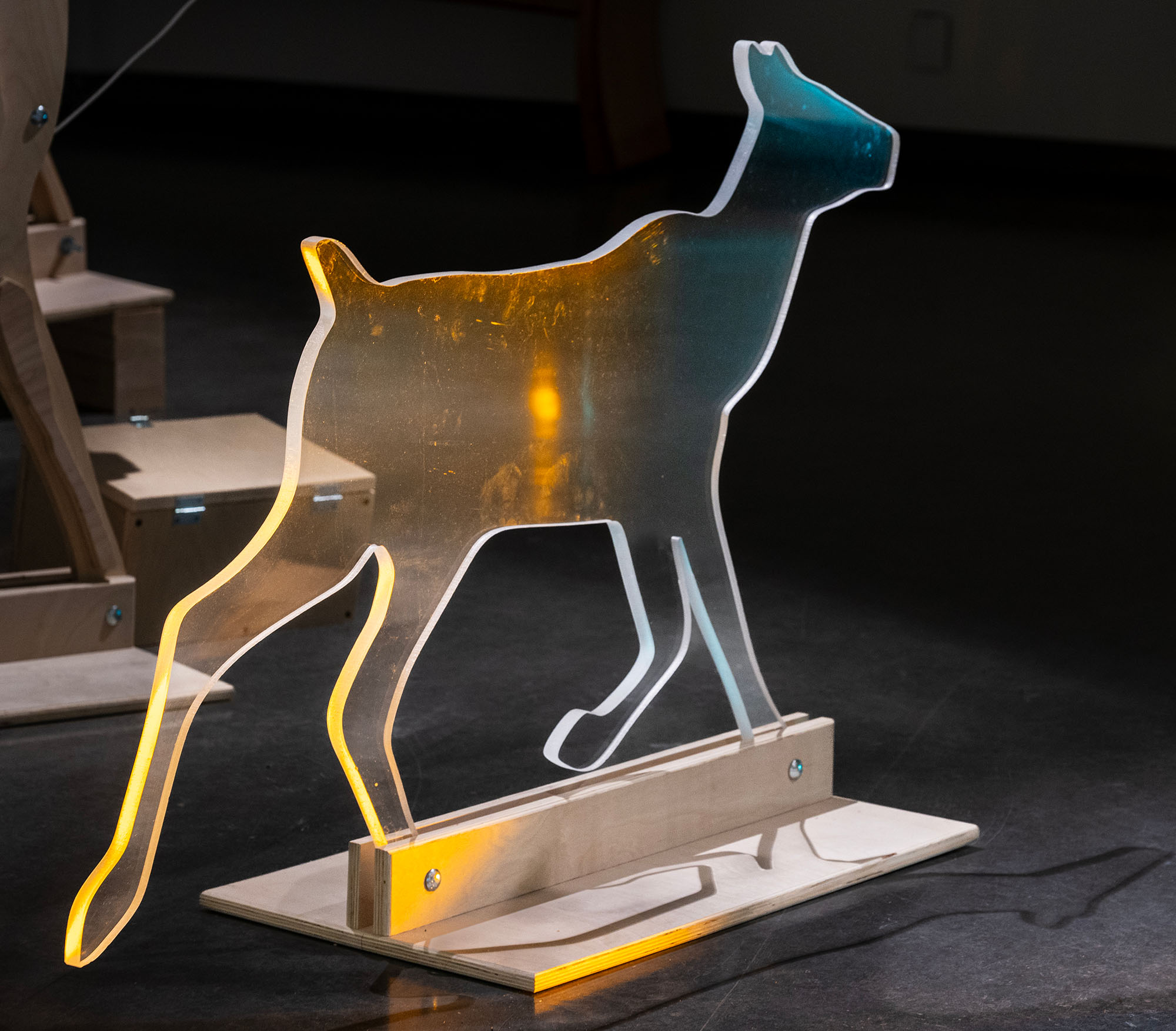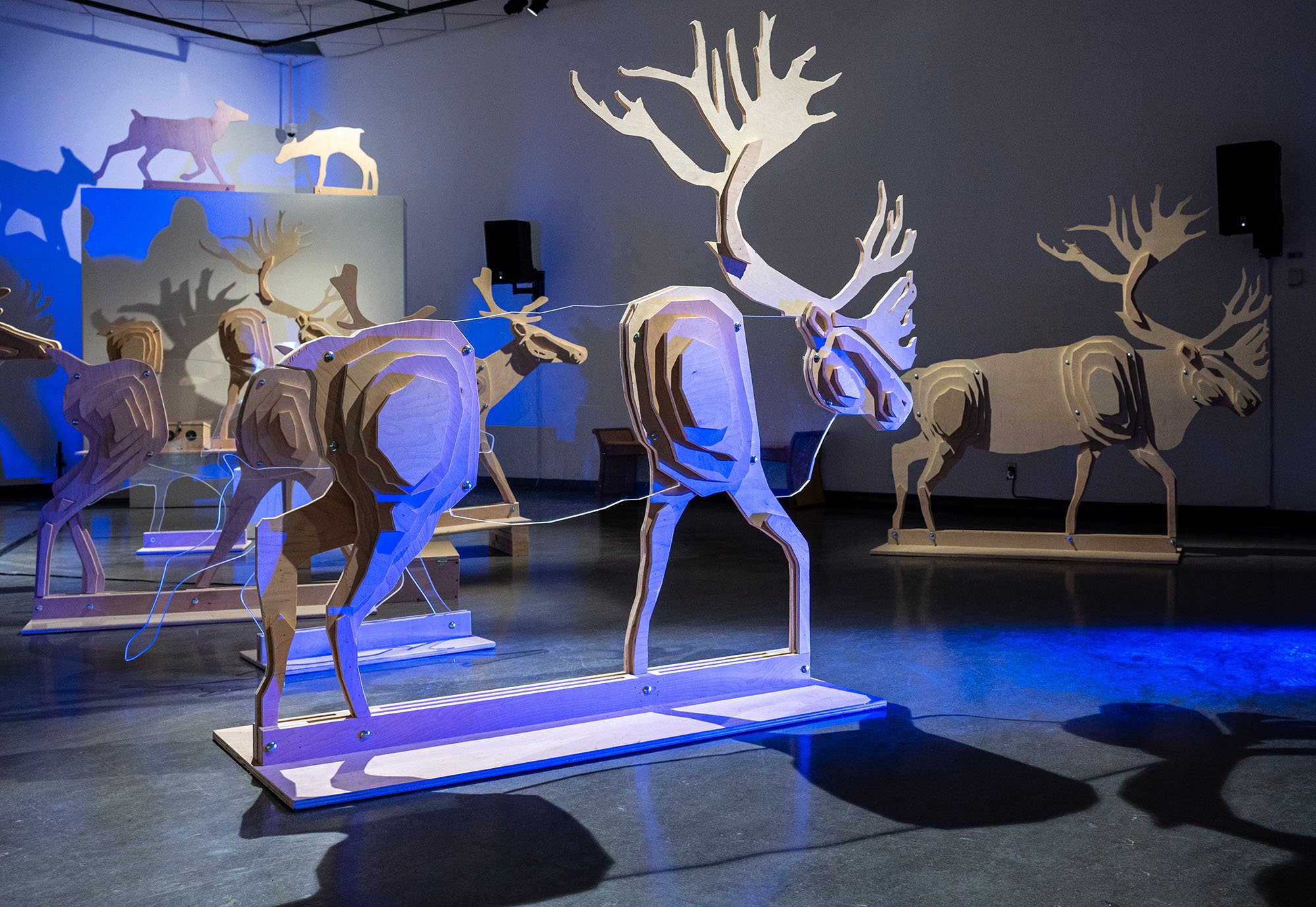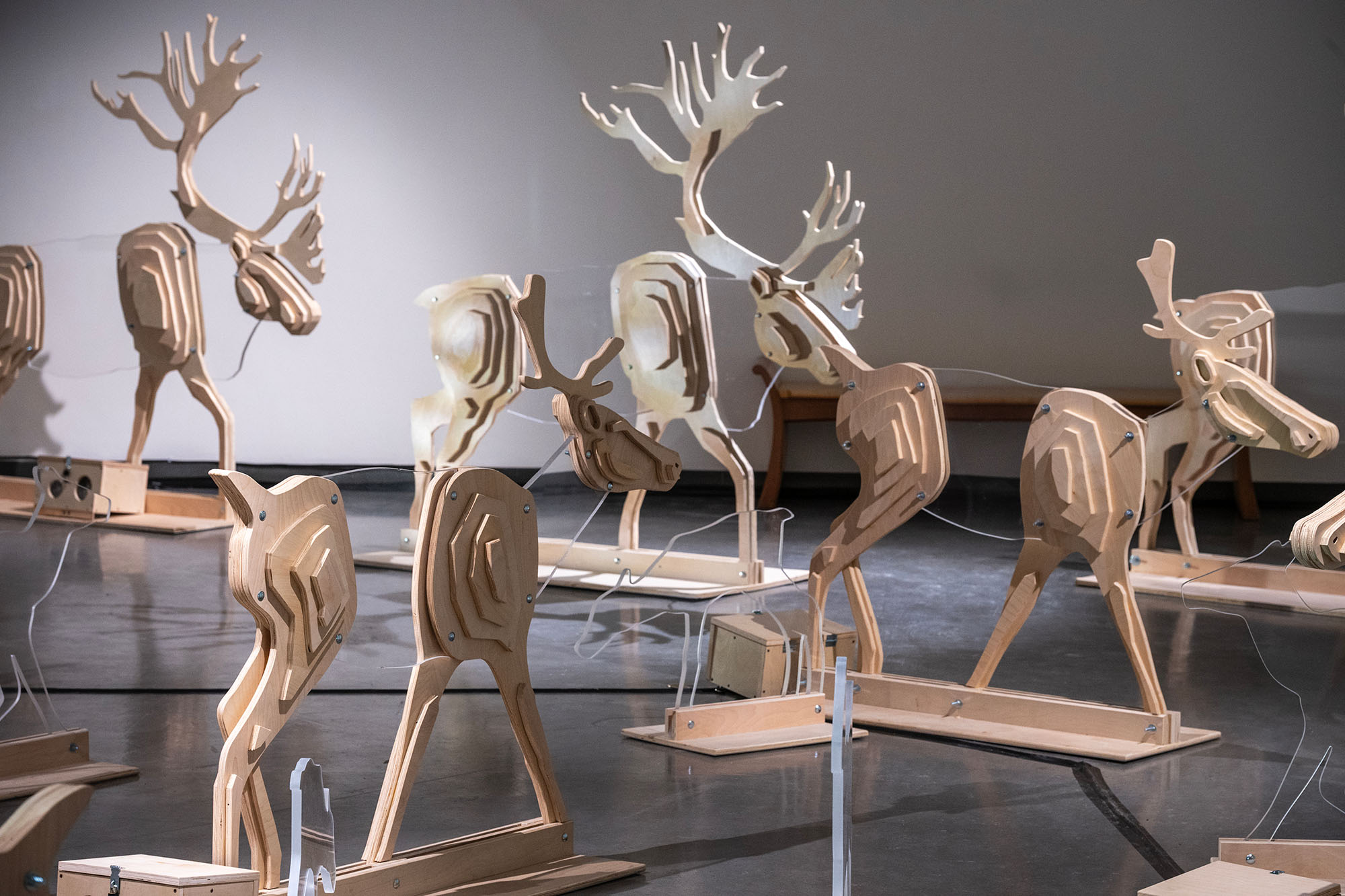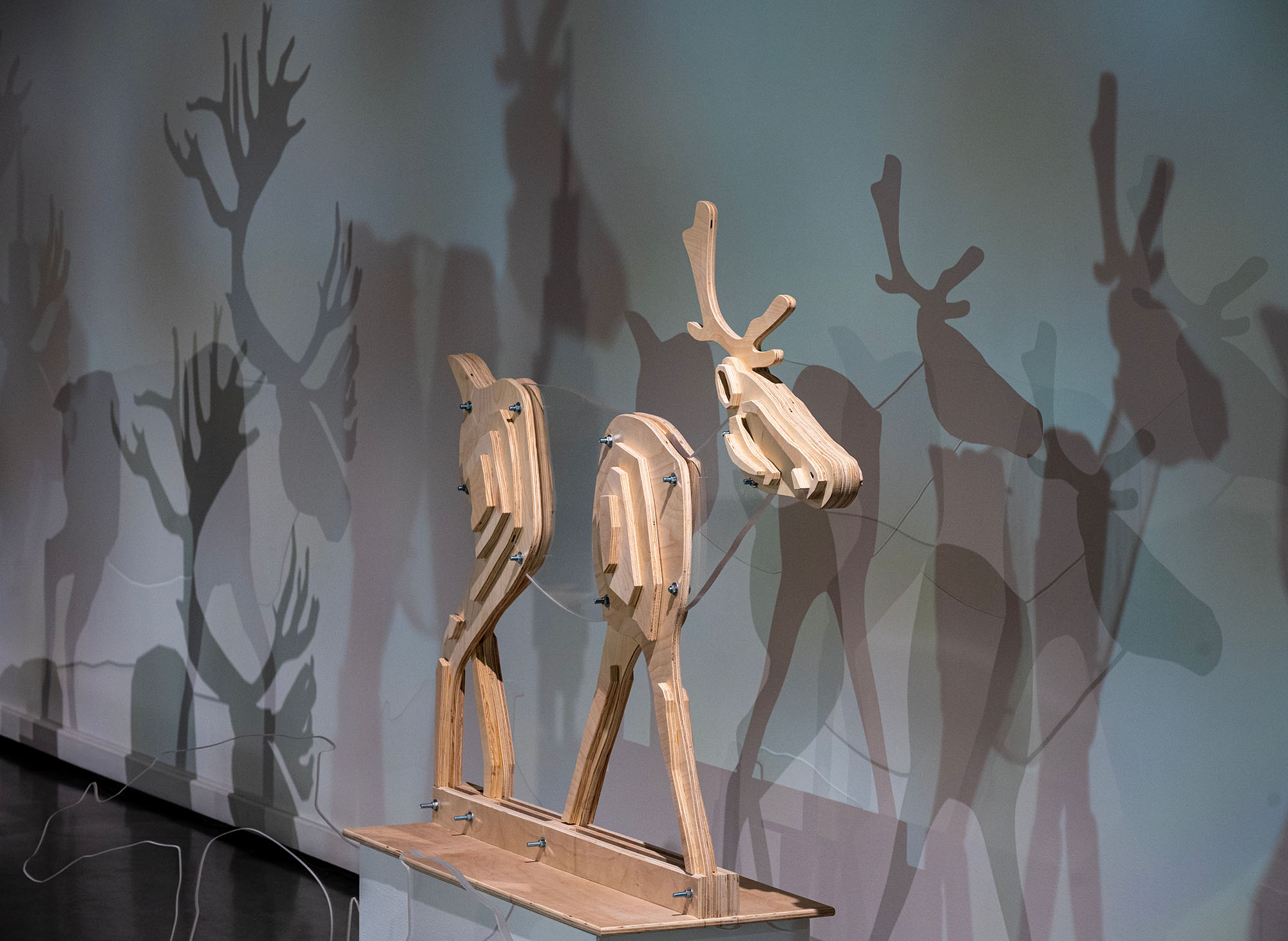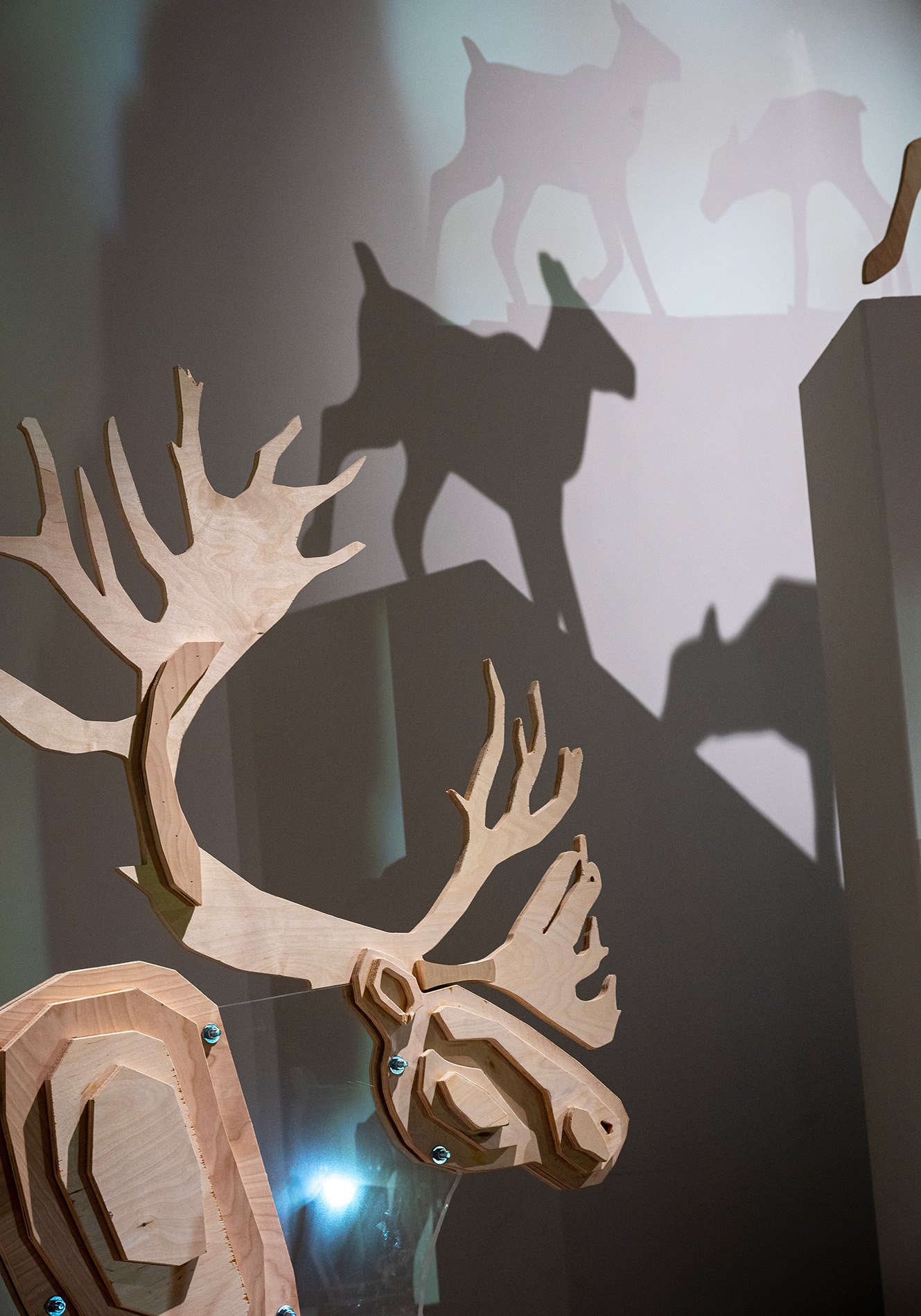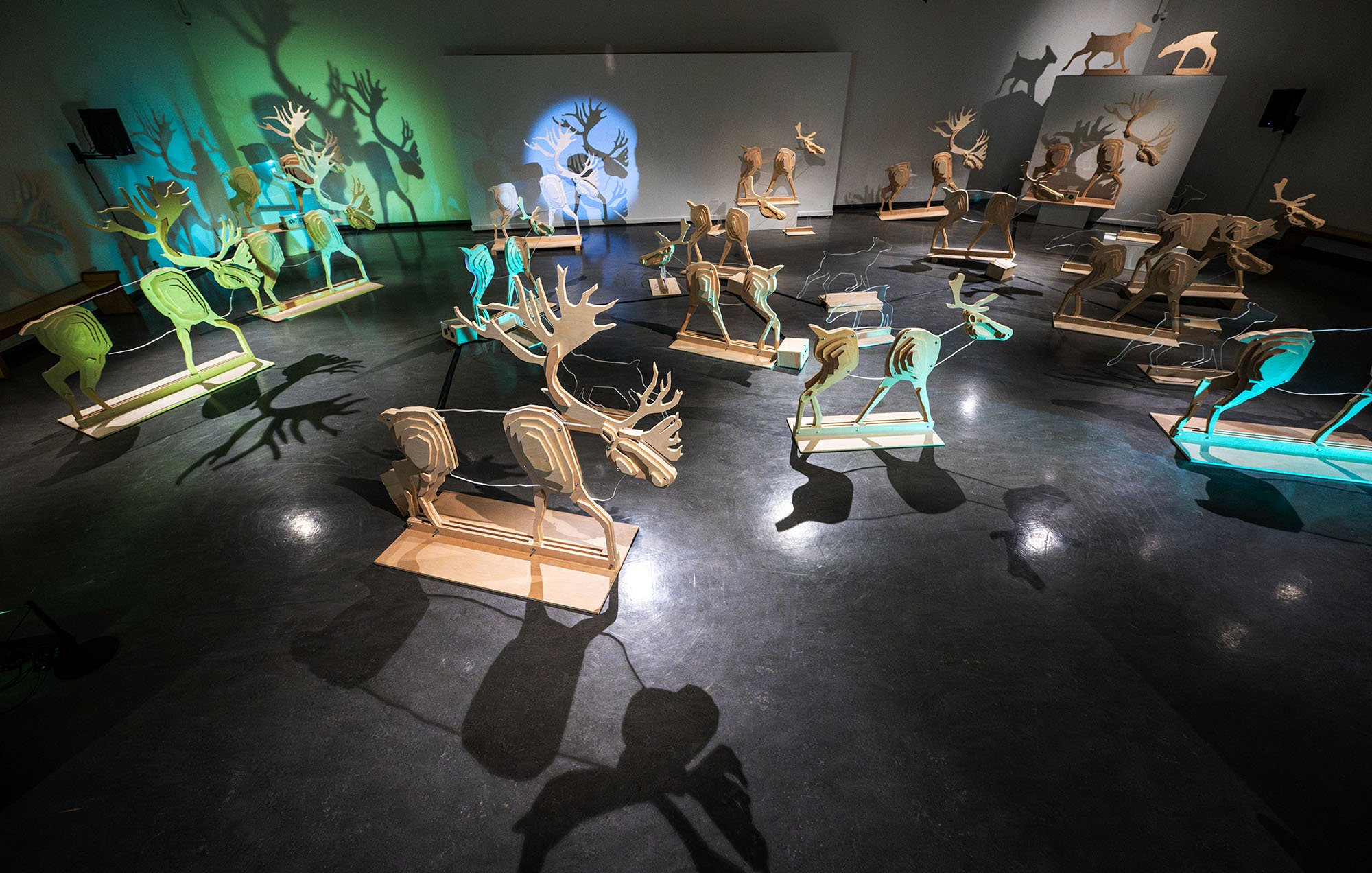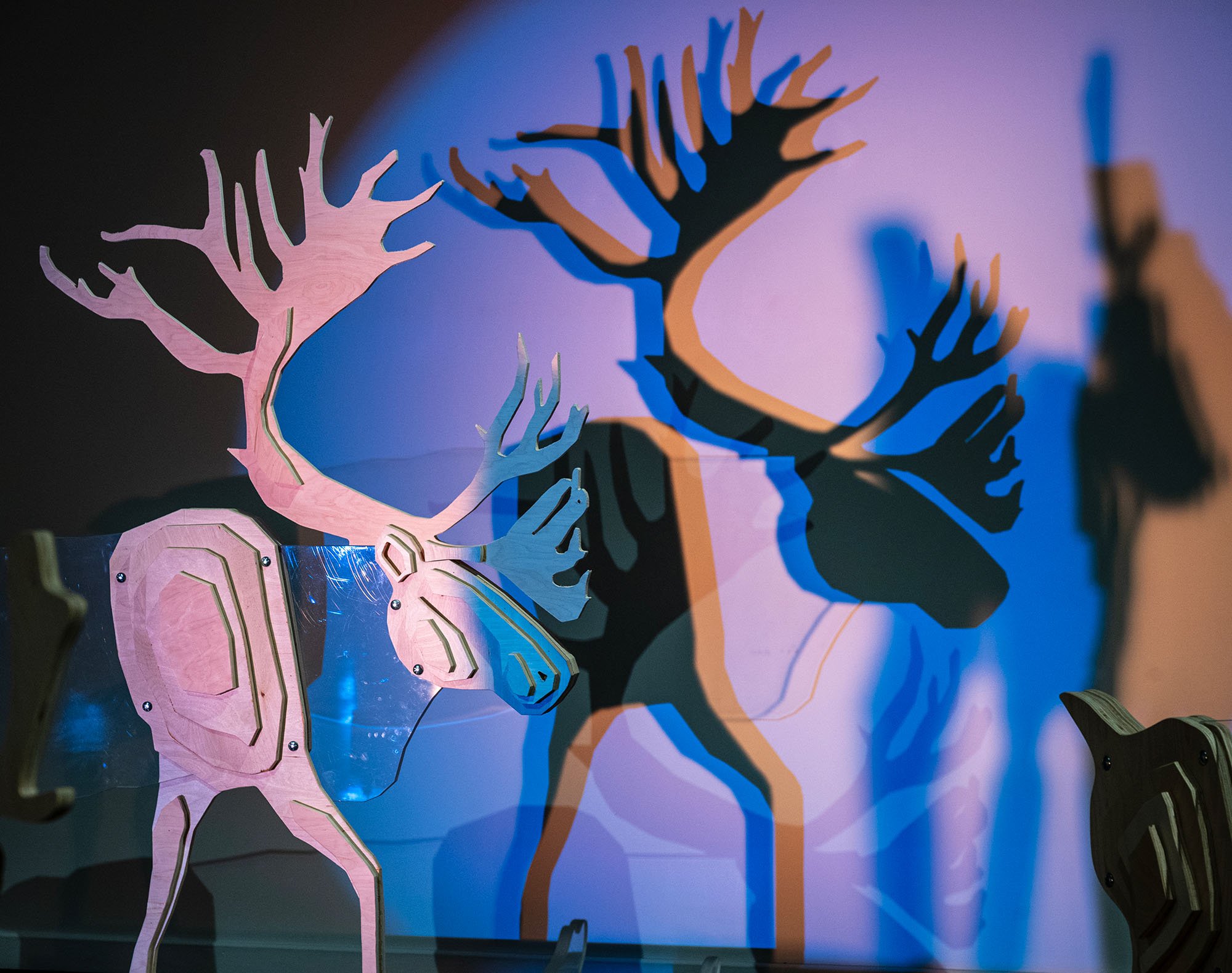
At first, the caribou were meant to be made of plexiglass. Then Lianne Leda Marie Charlie found out the cost of building 30 life-sized cows, calves and bulls from the material. Charlie laughs as she explains her decision to pivot to plywood for the bulk of the animals that make up The Caribou Art Project, her current exhibition at the Yukon Arts Centre.
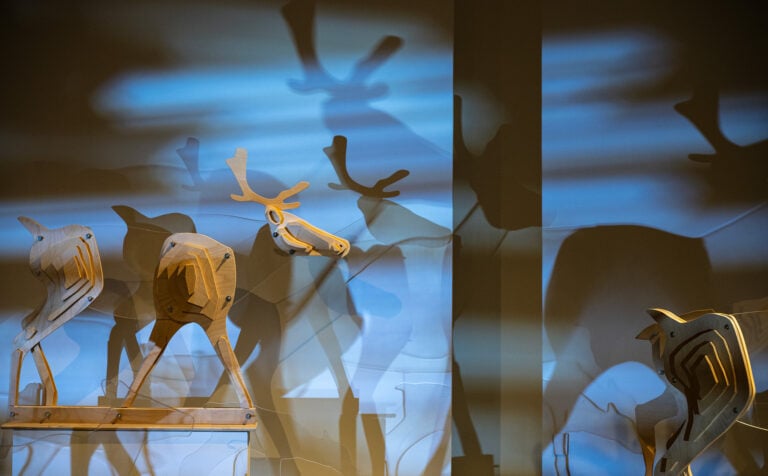
Plywood might not have been the original plan, one Charlie has been working on with her co-lead, Nic Hyatt, for the last five years, but she’s happy with how it turned out. A big part of the theme of the piece, which consists of plexi and plywood caribou sculptures, as well as a two-hour soundscape created by Hyatt and BC’s Danielle Savage, is the unknown future of the herds in the North. Charlie is concerned about caribou disappearing from the landscape even more than they already have (Whitehorse used to be part of their range) and the unknowns of a future that relies on capitalism and resource extraction in the North.
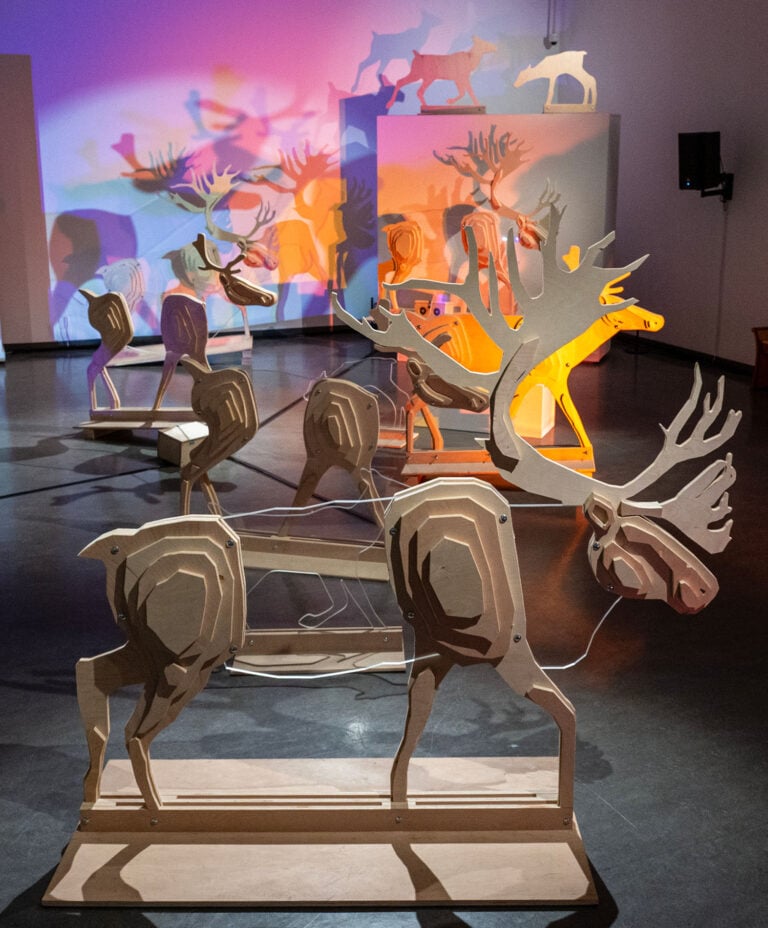
The plexiglass ghost calves speak to that possibility while the solid plywood calves, and lead bull and cow, speak to another, more hopeful possibility. A future where that ghosting may not occur.
Charlie (Tagé Cho Hudän, Northern Tutchone-speaking people of the Yukon) and Hyatt began the project with the help of a grant from the Canada Council for the Arts’ program in creating, knowing and sharing: the arts and cultures of First Nations, Inuit and Metis peoples.
It was unlike most art projects, Charlie says, in that it funded conversations with eight participants, including Amos Scott from the NWT, and Kaska Elders Dorothy Smith and Mary Maje, who shared their own experiences with caribou. It also funded hunting trips to places like Dechenla, a lodge on the North Canol Highway in the Mackenzie Mountains, where Hyatt gathered sound and stories.
How do we bring that caribou reality to people who don’t have proximity to that? And how do we get them to feel the love, the fear these Elders are living with?”
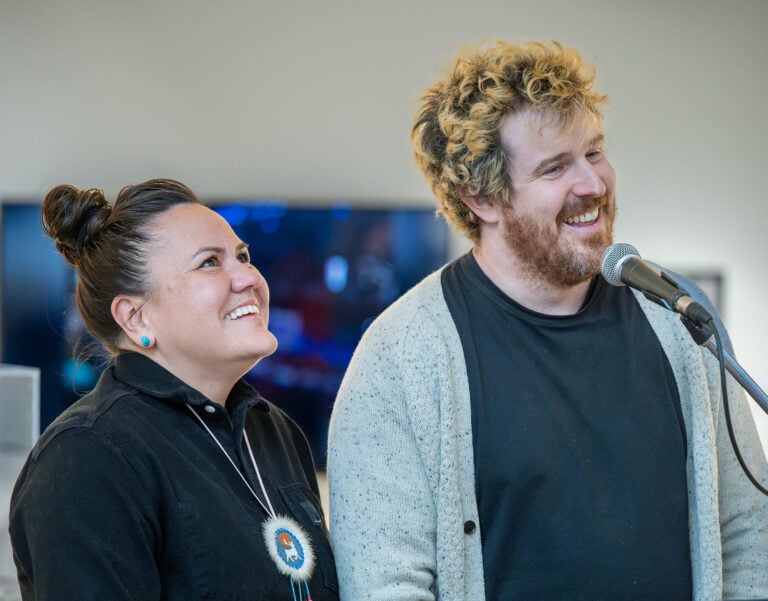
Of the core group of people, Hyatt was the only non-Indigenous member and says they felt their role was mostly supporting Indigenous people reconnecting with caribou. But Hyatt also developed, through the process of touching, tanning and eating on that hunt, a more embodied understanding of the animals. Finally seeing them all set up at the March 5 opening, Hyatt felt relief. It wasn’t until the reception ended, when the gallery was empty, that they felt solitude.
As you walk through the main gallery at YAC, you’re surrounded by Charlie’s and Hyatt’s caribou. She was guided in their placement by Scott, who has ample experience with caribou as a hunter who grew up in the NWT and Yellowknife Dene as a Tlicho man. Scott is the one who told her the bulls would walk protectively around the cows and calves; that the gallery floor was too flat and needed risers to lift some caribou higher to mimic the undulating land; that the animals should be moving through the gallery in such a way that they’re facing North as they exit. The walls are white, intentionally blank, same as the non-expressions of the caribou. It’s a political piece, but not one that tells you what to think or how to feel about it.
The room is outfitted with a series of handmade speakers, built by Savage. The sounds that come through them are of individual voices, wind, hide scraping and hooves, all gathered by Hyatt and the project participants. In Charlie’s mind, they were the perfect person for the job. Hyatt collaborates compulsively. “It’s almost a detriment,” they say. “Because I don’t really have any solo stuff. I really like working with people and it’s what motivated me. Seeing what we can bring out in each other.”
With this particular project, Hyatt’s and Savage’s musician’s sensibility was drawn to the arc and cadence of the way each participant spoke. If there wasn’t a musical flow, Hyatt looked at what parts weren’t flowing sonically and which words were core to the storytelling, then worked to weave story and musicality. In the end, the audio component tells a tale that’s cohesive in both individual story elements and in the overall experience of the sound.
Some of those who shared their stories, like Smith and Maje, dedicate their lives to land and caribou protection. That was another thing Charlie wanted to capture with the work.
“We see photos and hear of their trips to Ottawa and Washington DC,” she says. “But how do you capture their lives? What drives them? And especially how do we bring that caribou reality to people who don’t have proximity to that? And how do we get them to feel the love, the fear these Elders are living with?”
The show’s opening coincided with the Arctic Winter Games taking place in Whitehorse, bringing people from across the circumpolar North into the same space to walk amongst the herd. By the end of the night, the sculptures were covered with the finger and palm prints of people who’d touched them. That could get you chased out of some galleries, but not this one. Charlie invited viewers to interact with the caribou.
“We spent countless hours sanding all the wood so people don’t get slivers touching them,” she says. “It’s neat to see the remnants of people touching them and showing that connection.”
Those marks represent the intimacy that’s possible and the goal of the show—to bend proximity and create something that allows humans who were once very close to caribou, to be able to touch them.
The show runs at YAC until May 22. There are currently no plans to show it elsewhere, though Charlie is keen to install it on a street one day. Gallery hours are Monday to Friday, 10am-5pm and during performances.
IMAGE GALLERY