If 10 different people read the same book, they’d actually be reading 10 different books. Sure, there are elements of any story that all readers might agree on—basic plot, perhaps character—but everyone would also bring their own images, ideas and associations to the story in a way that gave each reading a unique shape.
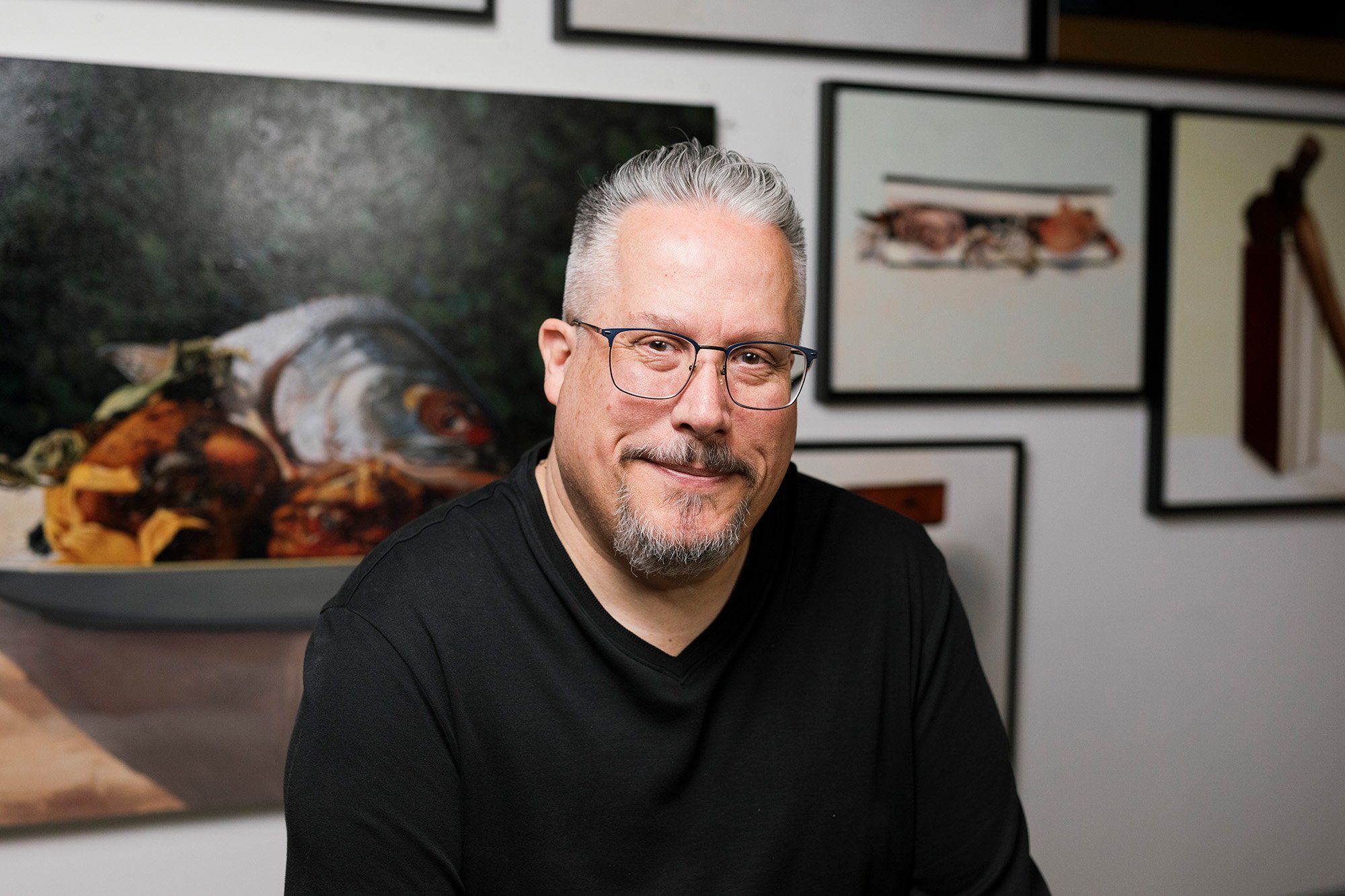
That idea is one that fascinates David Garneau, whose solo exhibition, Dark Chapters, is at the Yukon Arts Centre right now. The pieces in the show are similarly slippery, narratively speaking, as evidenced by the written work that accompanies them.
“I’m very suspicious about the centrality of narrative,” Garneau says over the phone from Saskatchewan, where he works as a professor of visual arts at the University of Regina. “When I describe these paintings, even though there are literal and literary meanings that I can impose on them, I think they operate in ways that are non-narrative.”
When I describe these paintings, even though there are literal and literary meanings that I can impose on them, I think they operate in ways that are non-narrative.”
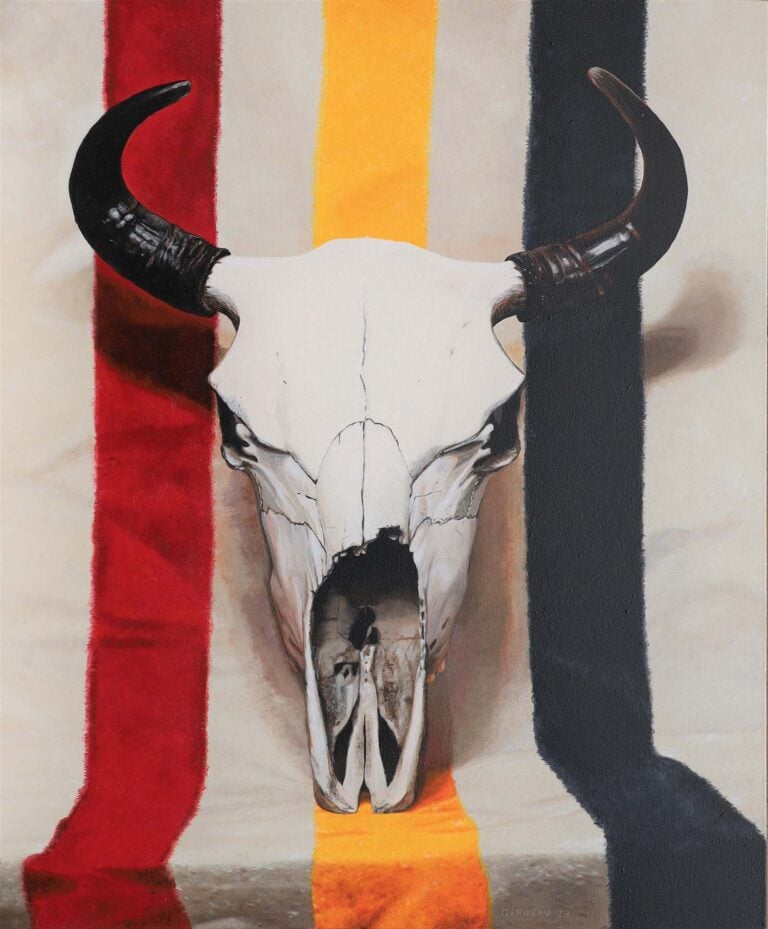
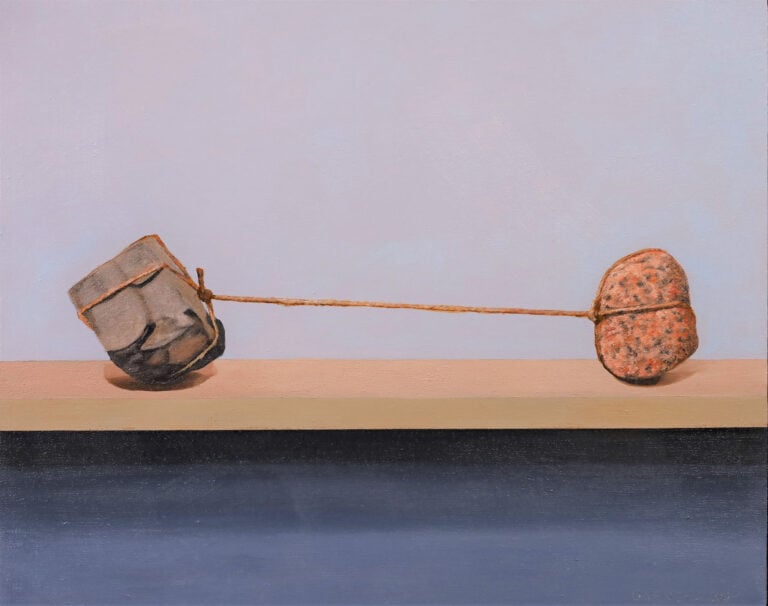
Garneau started the series in 2022 and has since produced more than 300 still life works that combine everyday objects with objects and symbols that reference his Métis heritage. As the painter, Garneau authored a certain story into each piece. But in asking some of his favourite Indigenous, black and settler writers (including Susan Musgrave, Paul Seesequasis and Jesse Wente) to respond to his work in words, with zero guidance from him, he’s seen unexpected readings of that work.
“There are narrative possibilities that I couldn’t have dreamt of that are co-produced with the reader,” he says. He’s currently working on paintings that respond to writing done in response to those paintings. It’s a dizzying possibility that he could volley artistic takes back and forth with his collaborators forever. Garneau keeps thinking the series will peter out but then a new environment or object gives him a fresh set of ideas.
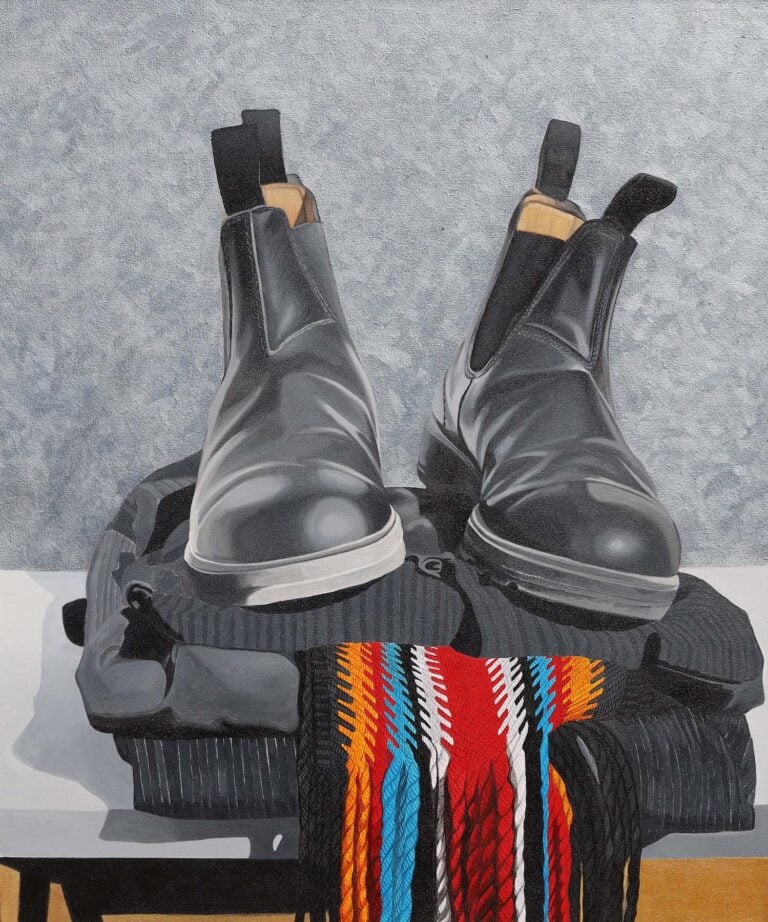
As the show has toured Canada, Garneau has also had the opportunity to talk to audiences about their thoughts and found a similar thing happens. If there are Métis people in the room they might focus on, for example, the woven sash sandwiched between a pair of boots and black clothing in Métis Packing for an Academic Award. Then they might tell a story from their own family that’s so far removed from what Garneau put into the painting.
That’s been another curious part of the project. In general, people sometimes think they can absorb the whole of an image just by glancing at it. The proof of these essays, poems and reactions, he says, is that when audiences take the time to read them, they get so much more out of the work than he ever put into it. Coming at still life work, Garneau uses what he refers to as the Kokum test for his concepts (“if you couldn’t explain to your grandmother, it’s probably bogus,” he says). This allows for a neater, simpler summary of an idea. The work then comes to life later, he says, when you talk about it.
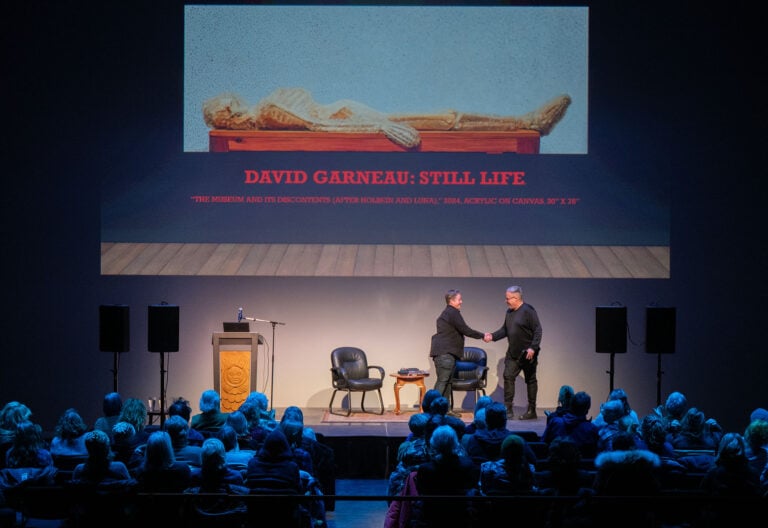
On February 18, Yukoners can take part when Garneau visits Whitehorse for a conversation with writer/storyteller Ivan Coyote. The pair haven’t spoken yet, so Garneau says it’s anyone’s guess where the evening will go, but that’s sort of the perfect format for a discussion of an exhibition that relies on its audience to help write the story. The event is co-presented by YAC and Yukon University.
Tickets are $10 and can be purchased here.